
Hub Hubbub: Tobique Joins the Prediction Market Game
Six days after CIRO's October 16 update, the Tobique First Nation enacted a prediction market statute and opened a permit regime that allows sports, political, and entertainment contracts.

Six days after CIRO's October 16 update, the Tobique First Nation enacted a prediction market statute and opened a permit regime that allows sports, political, and entertainment contracts.

Lawyers love to point out nuanced distinctions in technical terms, like the difference between a robbery and a burglary, or between a representation and a warranty. Most of these distinctions won’t have much impact on the day-to-day life of your average person.

Wealthsimple Predict went live on July 29, around four months after CIRO published the terms under which authorized investment dealers could offer event contracts to Canadian clients, and about a month after Wealthsimple first announced the app. Predict runs on Kalshi’s exchange and gives Canadians access to roughly 4,000 event contracts, confined to CIRO’s three permitted topics – economic indicators, financial markets, and climate. Other popular categories, like sports, elections and entertainment, are off the tradable list.

Prediction markets have a structural issue that geofencing can’t solve: someone, somewhere, usually knows how a contract will resolve before the rest of the market does. That problem was demonstrated earlier this month, when Reuters reported the CFTC was investigating a longtime White House teleprompter operator for allegedly trading on Kalshi “mention markets” – contracts that pay out based on whether a specific word or phrase gets said during a public event. Once betting extends into speeches, weather, and economic data the definition of who counts as an insider expands too: a speechwriter, a data provider, a government employee, or anyone else standing close enough to the outcome to know it before it happens can all take advantage of insider knowledge.
The 2026 FIFA World Cup is a fantastic opportunity to showcase the strength of Canada’s regulated sports betting market. Canada is co-hosting the tournament with the United States and Mexico. The World Cup runs from June 11 to July 19, 2026, with 48 countries, 104 matches across 16 cities, 13 of which will be hosted in Canada. Toronto will host six matches and Vancouver will host seven.
In April, we wrote about Canada’s emerging prediction market framework and the narrow path regulators appeared prepared to allow. Since then, prediction markets have continued to make headlines here in the Great White North and abroad. This article aims to provide an overview of the latest news related to prediction markets, with a focus on retail platforms educating investors, mainstream media covering younger-user interest, sports leagues responding to integrity risks, and overseas regulators pushing back against a product that they view as plain ol’ gambling.
The April newscycle has been a busy one for Canadian gambling updates. When I sat down to write this article, three main stories caught my eye. On the one hand, I could have written about two key pieces of legislation, aimed at changing Canada’s gambling advertising regulations at the federal and provincial levels, which have been progressing through their respective Houses. On the other hand, I could have covered how iGaming Ontario (“iGO”) recently announced the launch of BetGuard, a centralized self-exclusion program that would fill a gap in Ontario’s responsible gaming framework. And, on a third hand (where’d that come from?), I felt obligated to discuss how Alberta and Quebec have been given the go-ahead to participate (on opposing sides) in the Supreme Court of Canada appeal over whether Ontario can lawfully allow peer-to-peer online gambling liquidity for activities like poker and daily fantasy.
Recent developments in Canada suggest regulators are beginning to change their views around prediction markets. A March 26 bulletin from the Canadian Investment Regulatory Organization (“CIRO”) on event contracts, together with the approval allowing Wealthsimple and Interactive Brokers Canada to facilitate trading in a limited subsection of those products, indicates that Canada is prepared to permit some event-based contracts, but only on narrow and carefully controlled terms. Certain topics, such as predictions on the outcome of sporting events (a massive industry in the U.S.), will not be permitted in Canada.
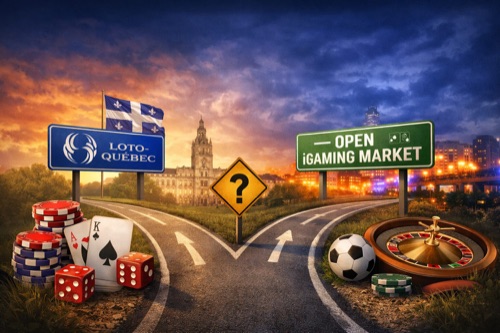
In early February 2026, a group of major private-sector iGaming operators, known as the Québec Online Gaming Coalition (“QOGC”), filed a brief as part of Québec’s 2026-2027 pre-budget consultations, publicly urging the province to create a Québec-specific regulatory framework for iGaming activities, like casino games and sports betting. QOGC’s argument can be broken down into three main points: (i) Québecers are already playing online across a large range of (unregulated) sites, (ii) unregulated iGaming weakens consumer protection, and (iii) Québec is leaving significant tax revenue on the table by not licensing and taxing commercial operators.

If you’re a gaming operator thinking about a Canadian expansion, Ontario and Alberta are likely at the top of your list. However, it would be a mistake to approach all Canadian provinces the same way. Some key distinctions between these provinces mean these jurisdictions are two very different environments that happen to share a federal Criminal Code backdrop. Ontario is already a mature, competitive, regulated online market with clear rules and plenty of data. Alberta, meanwhile, is the new kid on the block - a large, fast-growing, and high-income province where iGaming is currently channelled through the government-run Play Alberta, and where a competitive framework is now moving from strategy to implementation (including an application process and standards announced earlier this year).
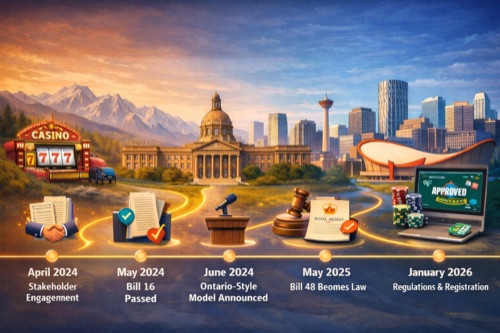
Alberta’s move toward a regulated iGaming market has followed a predictable trajectory: beginning with early signalling and stakeholder engagement, followed by enabling legislation, and finally, once the legal structure was in place, publishing operational documents and launching registration for prospective operators.
On January 13, 2026, Alberta’s competitive iGaming market officially moved out of the “concept deck” phase. Alberta Gaming, Liquor & Cannabis (“AGLC”) published an iGaming bulletin confirming that its Standards and Requirements for Internet Gaming (the “Standards”) had been published, and the application process would be made available for operators and suppliers. The Standards are the clearest snapshot so far of how Alberta plans to regulate and operationalize online gaming.

Alberta’s regulated iGaming market is officially taking shape, and if you’re an operator or supplier eyeing a launch, the window to get moving is already open. The province is building an “Ontario-style” framework, and the guidance released by the regulator yesterday includes details on their dual-track onboarding process, revenue-share model, and early signs that the rules for land-based casinos may be evolving in parallel. This article walks through what we know so far about how entry into Alberta will actually work in practice, starting with which government entities you need to talk to, what the application steps look like, and the key details that could affect your timeline and strategy.
Prediction markets have had a strange couple of weeks in the spotlight, and the recent controversy related to the popular game Roblox hasn’t helped. On a recent appearance on the Hard Fork podcast, Roblox CEO David Baszucki suggested that adding prediction markets for kids inside the platform would be a “brilliant idea,” as long as it could be done in an “educational way that’s legal.” He floated a game like “Dress to Impress Predictor,” where kids would forecast which avatar wins a fashion contest and stake something of value on the outcome, but with no monetary prizes or “free Robux.”
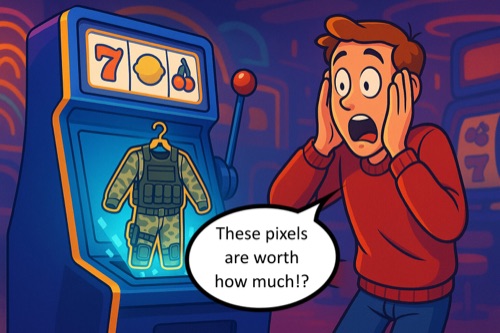
After its launch in 2023, Counter-Strike 2 (“CS2”) - the sequel to Counter-Strike: Global Offensive (“CS:GO”) - quickly became the most popular game on the hosting platform Steam, holding the all-time concurrent player record of 1,862,531 as of the writing of this article. CS2’s success has led to it being one of the most-streamed games on Twitch, as well as hosting massive global tournaments that bring in millions of viewers.
Prediction markets have been taking up a significant amount of oxygen in the U.S. gaming space. My current favourite reads on the topic are 50¢ Dollars, by Adhi Rajaprabhakaran, an early (former) Kalshi employee and pro prediction market trader, and The Event Horizon by gaming industry veteran Dustin Gouker.
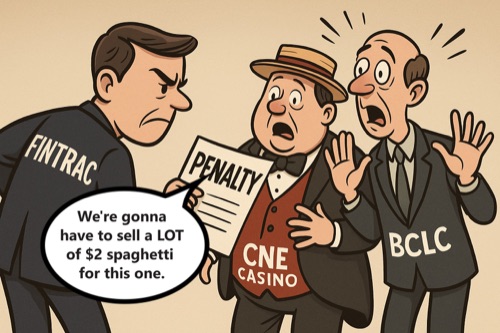
In the past month, the Financial Transactions and Reports Analysis Centre of Canada (FINTRAC) has issued two significant enforcement actions against major players in the country’s gambling sector: the Canadian National Exhibition (CNE) Casino (under the Canadian National Exhibition Association) and the British Columbia Lottery Corporation (BCLC).
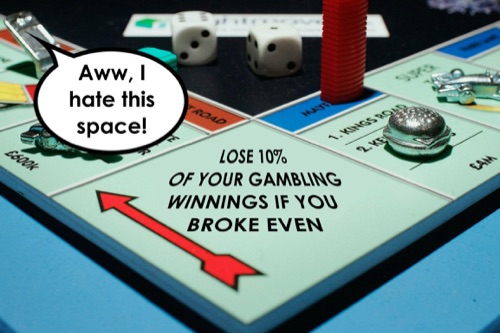
Changes to the way gambling winnings are taxed in the United States have been in the news recently. In summary, as of January 1, 2026, U.S. taxpayers can write off up to 90% (down from 100%) of their documented gambling losses against their winnings, meaning that some people could owe tax even if they “break even” in a calendar year. Efforts in Congress to undo the 90% cap (with catchy names like the FAIR BET Act and the FULL HOUSE Act) have yet to gain real traction. Additional changes, like a tweak to slot-reporting which aims to raise the W-2G threshold to $2,000 and index it to inflation, won’t kick in until the IRS updates its regulations, so casinos will continue issuing W-2Gs at $1,200 for now.
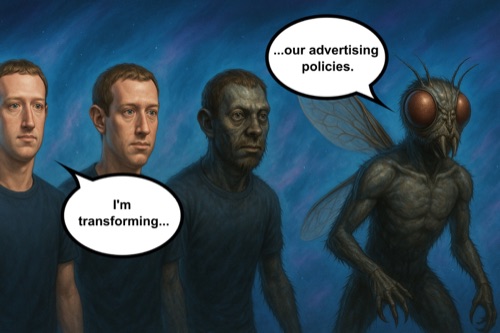
Earlier this month, Meta unveiled a sweeping rewrite of its “Online Gambling & Gaming” advertising standard, quietly posting an update that forces every gambling advertiser - from operators and affiliates to one‑off influencers - to pass through a new verification portal before a single Facebook or Instagram ad can run.
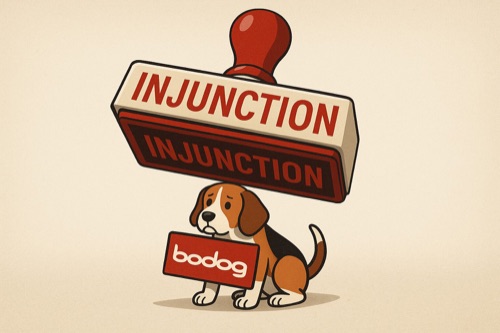
If you are reading this (and aren’t related to me), it’s probably because you're interested in the Canadian gaming landscape and maybe even Canadian gaming law. If that’s the case, then you’re likely familiar with the Bodog case in Manitoba. A few weeks ago, Justice Harris released his reasoning in the Bodog case, granting the applicant, Manitoba Liquor and Lotteries, everything it asked for. If you’re an operator in the Canadian market (excluding Ontario) or supplying goods and services to operators in this market, this decision may impact you. How? You’ll have to read below (or generate an AI summary of this article) to find out.
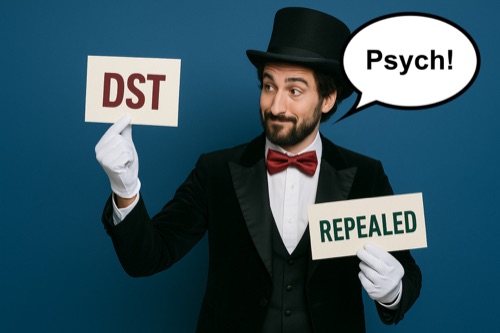
On June 30, 2025, the Canadian federal government announced that it would withdraw the Digital Services Tax (DST) before the first payments were due. Finance Minister François‑Philippe Champagne confirmed that legislation to rescind the Digital Services Tax Act will be tabled “in the coming days,” and the Canada Revenue Agency will not require returns or collect any amount that would have fallen due this summer.
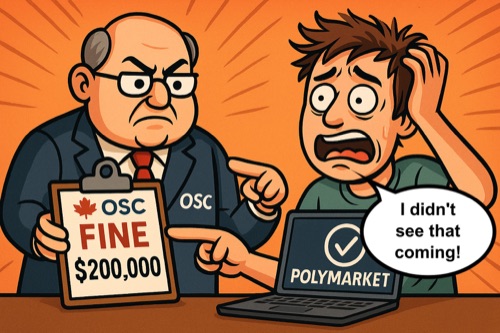
Earlier this year, the Ontario Securities Commission (OSC) levied a CAD $200,000 administrative penalty - plus CA$25,000 in investigation costs and a USD $22,966.75 disgorgement order - against the companies behind Polymarket, the high-profile crypto-prediction platform, ending a months-long enforcement action that reached the province’s Capital Markets Tribunal on April 14 and was approved on April 17, 2025.
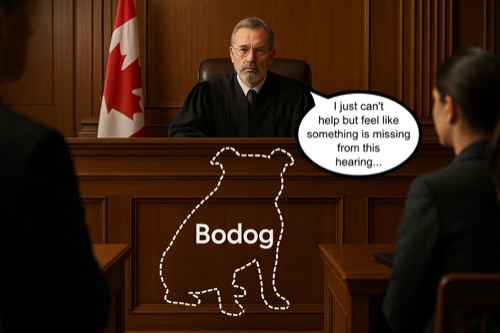
If you’re paying attention to the Canadian gaming scene, you’re aware that the Manitoba Court of King’s Bench granted an injunction prohibiting Bodog (operated by Il Nido Inc.) from offering or advertising online gambling services to Manitoba residents.

Bill 48 (the iGaming Alberta Act) cleared its third reading on May 7 and received Royal Assent on May 15, 2025. It will come into force on proclamation and create a Crown agent - the Alberta iGaming Corporation - to contract with private-sector casinos and sportsbooks. At the same time, Alberta Gaming, Liquor and Cannabis (AGLC) will keep its role as a regulator.
AI can write your emails, generate your vacation photos, and now - apparently - convince you to place a bet. As generative tools go mainstream, the gambling industry is starting to deploy them not just for backend efficiencies, but as the face of their ads. Literally.

In Ontario's regulated iGaming market, the Alcohol and Gaming Commission of Ontario (AGCO) has been clear that operators are accountable for the conduct of their affiliates. When those affiliates cross a regulatory line, the operator is responsible for the financial penalties.
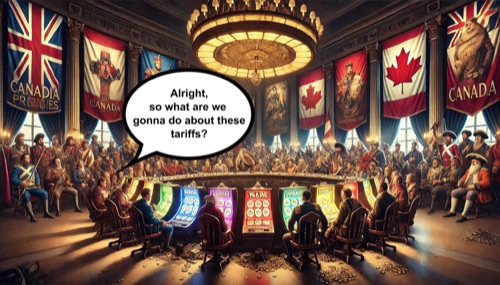
Canada’s trade war with the U.S. continues to escalate, and provinces across Canada are implementing measures to reduce reliance on American goods. The rising conflict has the potential to reshape industries on both sides of the border and the gaming industry has not been immune to the fallout from the ongoing tensions.
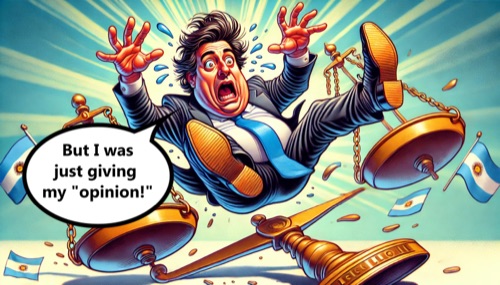
2025 is looking to be the year of the politically motivated meme-coin scheme (say that 10 times fast). Only last month I was writing about the launch of $TRUMP, $MELANIA, and, most importantly, $LORENZO in the leadup to the 47th President’s inauguration. While $TRUMP has certainly lost some value since its all-time high - from being valued at over $73 per coin on January 23, 2025, to now being worth only ~$15 per coin - it appears that it has held on to enough value for it not to be considered an outright scam.

As some of you may already know from reading last week’s article, Manitoba Liquor & Lotteries (“MBLL”) has taken legal action against offshore gambling operator Bodog, seeking to block its services in the province. MBLL, alongside the Canadian Lottery Coalition (“CLC”), filed an injunction with the Manitoba Court of King’s Bench, arguing that Bodog’s operations violate provincial gaming laws and divert revenue from Manitoba’s sole legal iGaming platform, PlayNow.com.

Something that keeps me up at night is knowing my old MSN messenger email account, leafs6rock@hotmail.com, might be floating around on the internet somewhere. I would hope that Microsoft, one of the biggest tech companies in the world, would have a reasonable policy around deleting dormant accounts, but who knows these days? I made that email account when I was 9 years old, so I’d be interested in learning who’s still been trying to email or contact me on MSN messenger after 20+ years.

The volatile world of meme coins continues to captivate and confound. Newly-(re)minted U.S. President Donald Trump recently launched his own cryptocurrency, $TRUMP, which has people wondering how these currencies actually work.

My favourite movies are about stealing. I’m a huge fan of traditional heist movies like Ocean’s Eleven and The Italian Job, but I also love unconventional theft movies like The Perfect Score where Chris Evans and Darius Miles steal the SAT answers, or Space Jam where the Monstars steal Charles Barkley and co’s basketball talent. And of course, the Social Network, where Mark Zuckerberg stole the idea for Facebook from the Winklevoss twins.
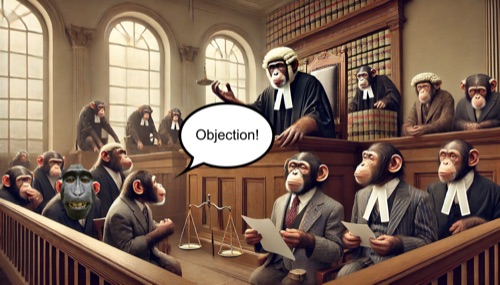
Following our article on authorship of copyrighted works by non-humans (which you can find here), today we’re diving into a curious case in which a monkey’s grin almost made copyright law go completely bananas.

For decades, the global consensus has been that only human creations can be protected by copyright. Yet, with the ever-growing presence of Artificial Intelligence (AI) generated content infiltrating the creative domain, the foundations of human authorship are being challenged.
Most of the attention on Michigan gaming last month was related to the cease and desist letter sent by the Michigan Gaming Control Board (MGCB) to Harp Media B.V. (Harp), the entity that operates Bovada.
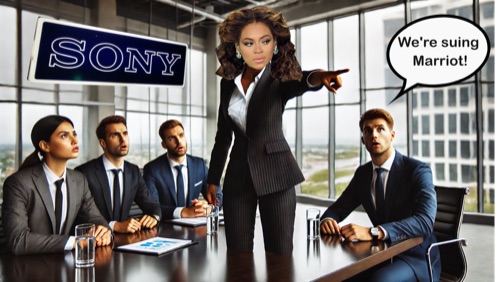
On the day of the release of the hit song “Texas Hold ‘Em” by Beyoncé, a Marriott social media employee probably thought it was a brilliant idea to have the song in the background of an Instagram post for the Ritz-Carlton Dallas location. I imagine the thought process went something like “if we use the song to promote a Texas hotel, we’ll definitely see more guests visit us because of the world’s universal love of Queen Bee”. Unfortunately for this employee, this situation may have contributed to Marriott’s broader intellectual property infringements of using Sony’s songs in their social media posts without proper permission. In fact, Sony filed a claim against Marriott last month in Delaware district court (the “Claim”) for this very reason. This blog will examine the Claim, the merits of Sony’s arguments, as well as implications for brands and influencers who may be thinking about using popular songs in their sponsored social media content.

Only a handful of songs carry the same legendary status as “Stairway to Heaven”. This iconic song with (arguably) the most recognizable guitar intro riff ever played, was composed by Led Zeppelin’s Robert Plant and Jimmy Page in 1971.
If you’ve been following our blog, you may have come across our on-site reporting of February’s landmark hearing between the Mohawk Council of Kahnawà:ke (“MCK”), iGaming Ontario (“iGO”), and the Attorney General of Ontario regarding the legality of Ontario’s Internet gambling scheme launched in 2022 (the “iGaming Scheme”).

Warning: shameless self-promotion incoming….

The National Collegiate Athletic Association (“NCAA”) bylaws1 (the “Bylaws”) govern the conduct of inter-collegiate athletes in the US. Article 10 of the Bylaws outlines the rules and restrictions related to ethical (or unethical) conduct and explicitly restricts activities related to sports gambling.
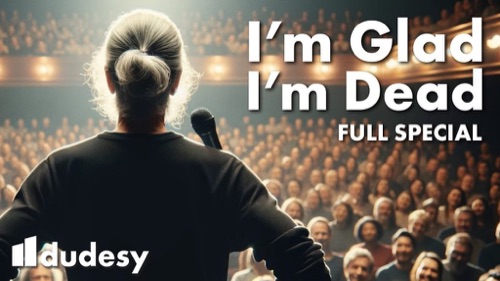
George Carlin is widely regarded as one of the best and most influential stand-up comedians of all time. Unfortunately, I never got the chance to see him perform live before he passed away in 2008, but luckily for me and stand-up comedy fans, a lot of his work remains available on YouTube. My favourite joke of his that always gets me when I need a good laugh is “think of how dumb the average person is, and realize half of them are dumber than that”. Speaking of people who may not be particularly bright, two podcasters (the “Hosts”) released an AI-generated Carlin comedy special (the “AI Routine”) without the permission of Carlin’s estate (the “Plaintiffs”), and now an action has been brought against the Hosts for infringing Carlin’s copyright and right of publicity (the “Carlin Suit”).1 This blog will examine the Carlin Suit, the laws pertaining to publicity rights in the US and Canada, and implications for brands who may decide to use generative AI in their work in the future.
Day two of the hearing kicked off on a sunny winter morning with a courtroom brimming with anticipation for the final session of the legal clash between iGaming Ontario (iGO), the Ministry of the Attorney General (MAG), and the Mohawk Council of Kahnawà:ke (MCK). With Justice Lisa Brownstone presiding, the mood was set for a decisive showdown.
In a quiet and expectant courtroom, the long-anticipated legal battle between the Mohawk Council of Kahnawà:ke (MCK) and iGaming Ontario (iGO), finally began to unfold. The judge delivered a reassuring greeting to all attendees and gave way to the hearing's initiation.
“We will give you some clues throughout the room, however, you MUST ask for a hint to be given one.”
As a teenager growing up in the early–mid 2000s, I witnessed some extraordinary advancements in consumer technology. In just a few years, I went from watching movies on VHS to DVD, to eventually being able to watch movies on my iPod (though actually getting movies onto my iPod was always a challenge). iTunes sold iPod-compatible movies but those usually cost anywhere from $9.99 CAD to $29.99 CAD. I remember classmates telling me that instead of paying for movies on iTunes, I could just download movies for free from peer-to-peer sharing websites like Napster or LimeWire. I was always petrified of the police knocking down my door and arresting me for breaking the law, so instead I ponied up the $20 to buy the Italian Job (which still lives on my iPhone today thanks to Apple ID). A few years later (about 10 give or take), the Canadian government decided to adopt new laws to prevent scoundrels like my schoolyard classmates from infringing copyrighted material on the internet – the Notice and Notice regime via Canada’s Copyright Modernization Act.1 This blog will take a look at the Notice and Notice regime, how the Notice and Notice regime compares to the United States’ Notice and Takedown regime via the Digital Millennium Copyright Act 2 (“DMCA”), and how internet service providers (“ISPs”) in Canada and the U.S. can comply with their local copyright infringement laws.

As video games started to become more popular and accessible, game developers began to incorporate the “freemium” model into their games – the strategy of making games free to play but charging money for additional features or in-game items. My first experience with a freemium game was in 2012 when I was procrastinating in the D.B. Weldon library as an undergraduate at Western University, trying to build a virtual Springfield in the Simpsons: Tapped Out on my iPhone 4. I knew that I needed to spend dozens of hours completing in-game tasks to build up enough in-game currency so I could buy the virtual items to build my Springfield. I realized that these items were also available for purchase with real currency as a way to skip some of the in-game tasks, but unluckily (or luckily?) for me, I was on a student budget so I didn’t have the disposable income to spend $50.00 USD to purchase the Lard Lad Donut Factory. Unfortunately, I couldn’t compete with players with deep pockets, so my dreams of having the world’s best virtual Springfield died a quick, painless death as I moved on to Flappy Bird, with my (real) wallet no worse for wear.
It’s been about one month since the NHL suspended its first player for violation of the league’s gambling rules. Shane Pinto of the Ottawa Senators was suspended for 41 games for “activities related to sports wagering”.1 At the time of the announcement, the NHL disclosed that Pinto did not bet on NHL games, however, few details of Pinto’s specific gambling activities have been released since that time. Some journalists have claimed that Pinto had a connection with a third-party proxy bettor, an issue with his account was initially flagged by one of the NHL’s betting partners, and the league’s investigation began over the summer,2 but this is about as many details that have been publicly released about the suspension. The public will likely remain in the dark surrounding the exact circumstances of the investigation and suspension since the suspension was the result of a negotiated settlement between Pinto and the NHL (which supposedly included a confidentiality clause).3
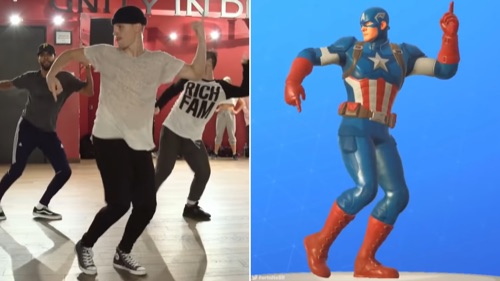
It seems like last week's blog post, the Fresh Prince of Copyright Claims, may have made its way all the way up to the United States Ninth Circuit Court of Appeals. Around 24 hours after publishing our blog, the Court overturned a dismissed lawsuit from choreographer Kyle Hanagami which alleged that Epic Games used some of his copyrighted choreography in a Fortnite emote. In February 2021, Hanagami registered a copyright with the US Copyright Office for a five-minute dance routine (the “Work”) which he originally published on YouTube in November 2017. However, in the interim in August 2020, Epic released an emote called “It’s Complicated” which Hanagami alleged copied 4 counts of movements (the “Steps”) from the Work.

In July 2017, Epic Games (“Epic”) released Fortnite and arguably revolutionized the video game industry. Fortnite’s release coincided with the height of the esports boom (the bubble has arguably burst – but that is a conversation for another time), as venture capital started pouring into the esports industry and social media networks like TikTok and Twitch started to gain mainstream popularity. Some of the biggest draws of Fortnite are its cartoon figures and the ability of characters to perform “emotes” – special dances or movements that are either free or available for purchase via the game’s item shop. One of the more popular emotes that was almost immediately available for purchase after Fortnite’s release was the “Fresh” emote, which was essentially a copy of Alfonso Ribeiro’s “Carlton” dance (the “Carlton”) from his time playing Carlton on the popular 90’s sitcom Fresh Prince of Bel Air.
“Be the change you wish to see in the world” is a phrase that has inspired me and countless others. It is typically attributed to Mahatma Gandhi, but we are vigorous fact-checkers at GME Law and won’t be making that mistake. What Gandhi actually said was “if we could change ourselves, the tendencies in the world would also change. As a [person] changes [their] own nature, so does the attitude of the world change toward [them]…We need not wait to see what others do.” Totally inspiring! Not only to me but also to NorthStar Gaming Holdings Inc. (operator of NorthStarBets.com) who announced plans to launch its online casino and sportsbook across Canada. Tired of waiting for province-by-province regulation? No problem – just launch in the rest of Canada. Eventually, the Canadian iGaming regulation space will change.

With summer officially over and winter quickly approaching, fans of the National Hockey League (“NHL”) are once again getting ready to watch their favourite teams embark on the journey to win the Stanley Cup. Self-aware fans who have already lost hope due to their teams’ repeated history of high expectations and eventual failure are preparing for yet another season of disappointment and dejection. I, unfortunately, am one of these fans. Sometimes I wonder if it is better to cheer for a team with no expectations, no desire to break a 57-year Stanley Cup drought, and no 24/7 media coverage – perhaps a team like the Columbus Blue Jackets is a better fit for me.

Imagine this scenario: you’re watching TV and you see a commercial that says with just a little bit of effort, you can get your own personal jet and collect over 20 million dollars in the process. Even though it may be far-fetched, you can’t help but picture yourself piloting your new jet to work and avoiding the chaos of public transportation, all while having a golden jacuzzi and a personal chef waiting for you once you get home. In the mid 90’s, this was the dream that Pepsi Co (“Pepsi”) sold to millions of consumers in the United States through its “Pepsi Stuff” television commercial (minus the jacuzzi and personal chef), and one ambitious 20-year-old (the “Plaintiff”) tried to take Pepsi up on its “offer”. However, instead of a jet, the Plaintiff’s efforts resulted in a court battle, a Netflix documentary (“Pepsi, Where’s My Jet?” or the “Documentary”), and a revelation that Canada’s advertising laws may be a force to be reckoned with. This blog will look at the Plaintiff’s case, Canada’s advertising laws, and important lessons for brands and agencies when selling something that may be “too good to be true”.

If you were a teenager growing up in the 90s or early 2000s, child stars like Macaulay Culkin, Mary Kate and Ashley Olsen, and Hillary Duff were household names and larger-than-life personalities. While these child stars gained popularity through movies and television appearances, children these days can grow a following simply by starting a social media channel (with their parent's consent) and talking about what they love. Take for example Ryan Kaji, a Youtuber who started reviewing toys on his channel at the age of 4 and last year was listed by Forbes as having a net worth of $27 million.1 Even though the scope of Kaji’s success is rare, it begs a question – what protections are in place to safeguard the money children make through social media fame? Last week Illinois became the first jurisdiction to pass a law (the “Illinois Law”) aimed at protecting the wealth of children under the age of 16 who appear in certain monetized social media content (“Kidfluencers”). This blog will examine the Illinois Law, some other child entertainer laws that are relevant in the Canadian context, as well as how brands and companies can protect themselves if they use Kidfluencers in their content.
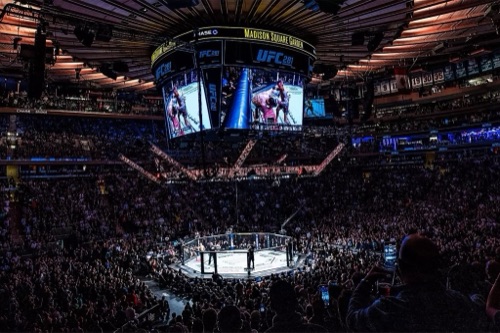
On December 6, 2022 we wrote about the decision of the Alcohol and Gaming Commission (AGCO) to establish a blanket prohibition on UFC betting. We set out four takeaways and our general view was that the decision to prohibit UFC demonstrated the AGCO's commitment to player protection and integrity. We also noted that the prohibition would likely be temporary and, that as long as the ban was in place, the Ontario unregistered market would get a boost.

The last time the Federal Trade Commission (the “FTC”) updated the FTC’s Guides Concerning the Use of Endorsements and Testimonials in Advertising (the “Guide”), many of the social media platforms that are widely used today like Instagram, TikTok, and Snapchat didn’t exist, and influencer marketing only existed via traditional media or to the extent paparazzi were able to snap a picture of a celebrity wearing a particular brand (think Paris Hilton x Von Dutch). But the FTC has updated the Guide for the first time since 2009 due to the widespread use of social media platforms and the ascent of the influencer marketing industry. Some of the most notable updates to the Guide include the ability for “intermediaries'' such as advertising or PR agencies to be liable for deceptive marketing practices and new restrictions on paying for positive reviews and fake followers. If your agency or company works with influencers, read on to learn how you can stay on the right side of the updated Guide!
Artificial Intelligence (“AI”) is this year’s new buzzword. Any substantial scrolling on social media reveals threads by entrepreneur influencers on how to use ChatGPT to save time and make money. However, not all users are engaging with AI appropriately. Whether it is a lawyer relying on fake cases generated by ChatGPT, students using ChatGPT to write essays, or a music producer using celebrity voices without the artists’ consent, there are clearly risks as AI capabilities advance. In response to concerns about AI being used for harmful (and illegal) purposes such as fraud, intellectual property infringement, and invading privacy, governments across the world, including Canada, have begun the process of implementing laws to limit the risks associated with AI. This article will examine Canada’s approach to AI, provide selected highlights of Bill C-27, a law proposed to regulate AI in Canada’s private sector, and outline how businesses should approach using AI in preparation for Canada’s potential AI legislation.

When Epic Games (“Epic”) was fined $520 million dollars by the Federal Trade Commission (“FTC”) back in December 2022, $245 million dollars of that fine was due to Epic’s illegal “dark patterns” related to their billing practices. According to the FTC, the “dark patterns” involved intentionally making the purchase feature within Fortnite ambiguous, failing to obtain express consent from parents prior to children making purchases, and, in some cases, restricting a child’s account access when parents complained about unwanted charges appearing on credit card statements. This article will examine the lawsuit, the laws pertaining to dark patterns, and how game developers and service providers can avoid attracting similar liability from competition bodies like the FTC or the Canadian Competition Bureau.
Eleven days after a judge certified a class action against Epic Games (“Epic”) in Québec, Epic was ordered to pay $520 million in fines to the US Federal Trade Commission (“FTC”). Of those, $275 million were for violating US consumer protection laws, including the Children’s Online Privacy Protection Rule (“COPPA”)1and the Federal Trade Commission Act (the “Act”)2. The judge ordered Epic to pay $245 million for “dark patterns and billing practices”3. This chapter of our Fortnite Lawsuit Royale series will examine Epic’s COPPA and Act violations. We will look into the implications for game developers and businesses that market their products or services to children under 13 (“Children”).

Another week, another celebrity sued for promoting crypto companies. In this case, celebrities like Jimmy Fallon, Justin Beiber, and Madonna are alleged to have been involved in a class action over promoting Bores Ape Yacht Club ("BAYC") NFTs. As you might know, we recently examined Canada’s misleading advertising laws in our FTX article. This case revolves around celebrities' social media disclosures (or lack thereof) about their relationship with BAYC. We will examine both Canadian Competition Bureau's (the "Bureau") and US Federal Trade Commission's ("FTC") laws regarding influencers and social media disclosures.
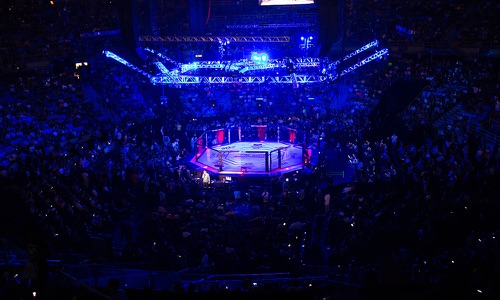
On December 1st, 2022, the Alcohol and Gaming Commission (AGCO) released a press statement requiring registered iGaming operators to cease offering and accepting UFC bets due to concerns over betting integrity.

There has been no shortage of drama over the past few months with the fallout of FTX–the now-defamed cryptocurrency exchange. After its peak in July 2021 and having the third largest cryptocurrency exchange, they declared bankruptcy in November 2022, causing many investors and users to lose millions of dollars and search for who to blame.

Bill 64, An Act to modernize legislative provisions as regards the protection of personal information, came into force on September 22nd, 2022, and sets out new requirements for private sector organizations that operate in Québec or have Québec consumers. This is particularly important for online gaming companies which operate solely in Québec or across Canada. This article will outline a summary of notable changes in force as of September 2022 and the implications for companies that may be affected.
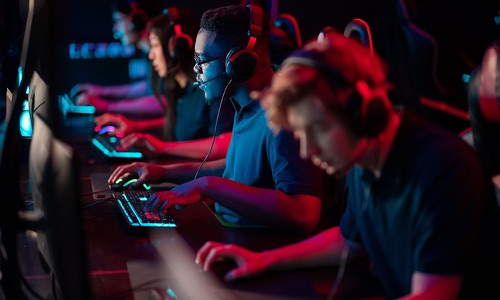
On October 4th, 2022, the Alcohol and Gaming Commission of Ontario (AGCO) announced that its Registrar’s Standards would be updated to end the transition period for unregulated operators and suppliers. This article will break down what these changes mean, and it will help you understand how your business may be affected.

“Bet on Yourself” is a phrase used by both Toronto Raptors Guard Fred Van Vleet and Players’ Lounge (an online tournament platform that allows casual video gamers to “pay for play” or “PFP,” for ease of reference). This means that players can pay to enter online matches or tournaments, and the winner of said matches or tournaments can win cash prizes.
In early December, a Québec judge certified a class action (the “Complaint”) against Epic Games (“Epic”) – the developers of the popular video game Fortnite – on behalf of Québec users who had become addicted to Fortnite since September 1, 2017 (the “Class”). This article examines the Complaint and the relevant Québec consumer protection laws Epic allegedly violated.