
The Splash-ification of Survivor and Pick ‘Em Pools
How Splash Sports changed the way survivor and pick ’em pools are run, and how its Canadian contests are structured as sweepstakes.

How Splash Sports changed the way survivor and pick ’em pools are run, and how its Canadian contests are structured as sweepstakes.
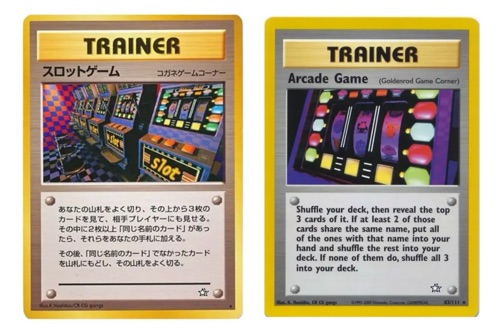
The hobby of collecting cards has been around for more than a century. In the “early days,” collectible cards were largely marketed to children. Today, adult collectors are turning the hobby into a career by trading valuable cards in secondary markets and using repacking platforms with gambling-like elements. At GME Law, we have prepared a series of articles examining different aspects of the hobby. In particular, we explore whether repacking platforms and physical booster packs may constitute forms of gambling with a focus on Pokémon cards.

Wealthsimple Predict went live on July 29, around four months after CIRO published the terms under which authorized investment dealers could offer event contracts to Canadian clients, and about a month after Wealthsimple first announced the app. Predict runs on Kalshi’s exchange and gives Canadians access to roughly 4,000 event contracts, confined to CIRO’s three permitted topics – economic indicators, financial markets, and climate. Other popular categories, like sports, elections and entertainment, are off the tradable list.

Prediction markets have a structural issue that geofencing can’t solve: someone, somewhere, usually knows how a contract will resolve before the rest of the market does. That problem was demonstrated earlier this month, when Reuters reported the CFTC was investigating a longtime White House teleprompter operator for allegedly trading on Kalshi “mention markets” – contracts that pay out based on whether a specific word or phrase gets said during a public event. Once betting extends into speeches, weather, and economic data the definition of who counts as an insider expands too: a speechwriter, a data provider, a government employee, or anyone else standing close enough to the outcome to know it before it happens can all take advantage of insider knowledge.

The 2026 FIFA World Cup is a fantastic opportunity to showcase the strength of Canada’s regulated sports betting market. Canada is co-hosting the tournament with the United States and Mexico. The World Cup runs from June 11 to July 19, 2026, with 48 countries, 104 matches across 16 cities, 13 of which will be hosted in Canada. Toronto will host six matches and Vancouver will host seven.
In April, we wrote about Canada’s emerging prediction market framework and the narrow path regulators appeared prepared to allow. Since then, prediction markets have continued to make headlines here in the Great White North and abroad. This article aims to provide an overview of the latest news related to prediction markets, with a focus on retail platforms educating investors, mainstream media covering younger-user interest, sports leagues responding to integrity risks, and overseas regulators pushing back against a product that they view as plain ol’ gambling.

The April newscycle has been a busy one for Canadian gambling updates. When I sat down to write this article, three main stories caught my eye. On the one hand, I could have written about two key pieces of legislation, aimed at changing Canada’s gambling advertising regulations at the federal and provincial levels, which have been progressing through their respective Houses. On the other hand, I could have covered how iGaming Ontario (“iGO”) recently announced the launch of BetGuard, a centralized self-exclusion program that would fill a gap in Ontario’s responsible gaming framework. And, on a third hand (where’d that come from?), I felt obligated to discuss how Alberta and Quebec have been given the go-ahead to participate (on opposing sides) in the Supreme Court of Canada appeal over whether Ontario can lawfully allow peer-to-peer online gambling liquidity for activities like poker and daily fantasy.
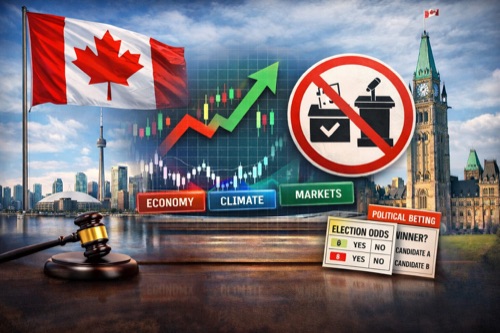
Recent developments in Canada suggest regulators are beginning to change their views around prediction markets. A March 26 bulletin from the Canadian Investment Regulatory Organization (“CIRO”) on event contracts, together with the approval allowing Wealthsimple and Interactive Brokers Canada to facilitate trading in a limited subsection of those products, indicates that Canada is prepared to permit some event-based contracts, but only on narrow and carefully controlled terms. Certain topics, such as predictions on the outcome of sporting events (a massive industry in the U.S.), will not be permitted in Canada.
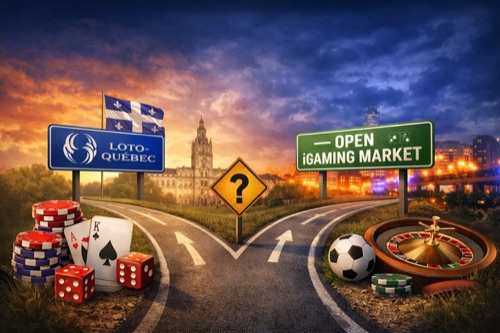
In early February 2026, a group of major private-sector iGaming operators, known as the Québec Online Gaming Coalition (“QOGC”), filed a brief as part of Québec’s 2026-2027 pre-budget consultations, publicly urging the province to create a Québec-specific regulatory framework for iGaming activities, like casino games and sports betting. QOGC’s argument can be broken down into three main points: (i) Québecers are already playing online across a large range of (unregulated) sites, (ii) unregulated iGaming weakens consumer protection, and (iii) Québec is leaving significant tax revenue on the table by not licensing and taxing commercial operators.

If you’re a gaming operator thinking about a Canadian expansion, Ontario and Alberta are likely at the top of your list. However, it would be a mistake to approach all Canadian provinces the same way. Some key distinctions between these provinces mean these jurisdictions are two very different environments that happen to share a federal Criminal Code backdrop. Ontario is already a mature, competitive, regulated online market with clear rules and plenty of data. Alberta, meanwhile, is the new kid on the block - a large, fast-growing, and high-income province where iGaming is currently channelled through the government-run Play Alberta, and where a competitive framework is now moving from strategy to implementation (including an application process and standards announced earlier this year).
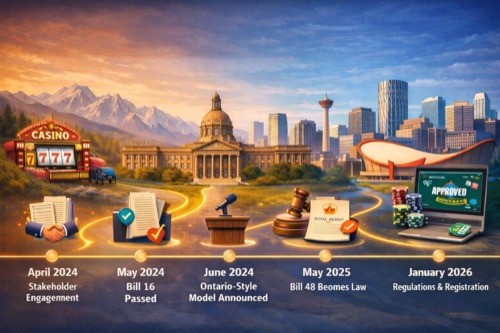
Alberta’s move toward a regulated iGaming market has followed a predictable trajectory: beginning with early signalling and stakeholder engagement, followed by enabling legislation, and finally, once the legal structure was in place, publishing operational documents and launching registration for prospective operators.
On January 13, 2026, Alberta’s competitive iGaming market officially moved out of the “concept deck” phase. Alberta Gaming, Liquor & Cannabis (“AGLC”) published an iGaming bulletin confirming that its Standards and Requirements for Internet Gaming (the “Standards”) had been published, and the application process would be made available for operators and suppliers. The Standards are the clearest snapshot so far of how Alberta plans to regulate and operationalize online gaming.

Alberta’s regulated iGaming market is officially taking shape, and if you’re an operator or supplier eyeing a launch, the window to get moving is already open. The province is building an “Ontario-style” framework, and the guidance released by the regulator yesterday includes details on their dual-track onboarding process, revenue-share model, and early signs that the rules for land-based casinos may be evolving in parallel. This article walks through what we know so far about how entry into Alberta will actually work in practice, starting with which government entities you need to talk to, what the application steps look like, and the key details that could affect your timeline and strategy.
Prediction markets have had a strange couple of weeks in the spotlight, and the recent controversy related to the popular game Roblox hasn’t helped. On a recent appearance on the Hard Fork podcast, Roblox CEO David Baszucki suggested that adding prediction markets for kids inside the platform would be a “brilliant idea,” as long as it could be done in an “educational way that’s legal.” He floated a game like “Dress to Impress Predictor,” where kids would forecast which avatar wins a fashion contest and stake something of value on the outcome, but with no monetary prizes or “free Robux.”

After its launch in 2023, Counter-Strike 2 (“CS2”) - the sequel to Counter-Strike: Global Offensive (“CS:GO”) - quickly became the most popular game on the hosting platform Steam, holding the all-time concurrent player record of 1,862,531 as of the writing of this article. CS2’s success has led to it being one of the most-streamed games on Twitch, as well as hosting massive global tournaments that bring in millions of viewers.
Prediction markets have been taking up a significant amount of oxygen in the U.S. gaming space. My current favourite reads on the topic are 50¢ Dollars, by Adhi Rajaprabhakaran, an early (former) Kalshi employee and pro prediction market trader, and The Event Horizon by gaming industry veteran Dustin Gouker.
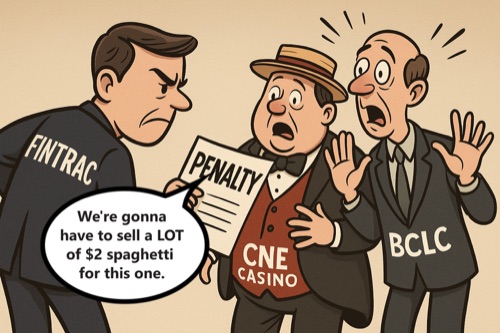
In the past month, the Financial Transactions and Reports Analysis Centre of Canada (FINTRAC) has issued two significant enforcement actions against major players in the country’s gambling sector: the Canadian National Exhibition (CNE) Casino (under the Canadian National Exhibition Association) and the British Columbia Lottery Corporation (BCLC).
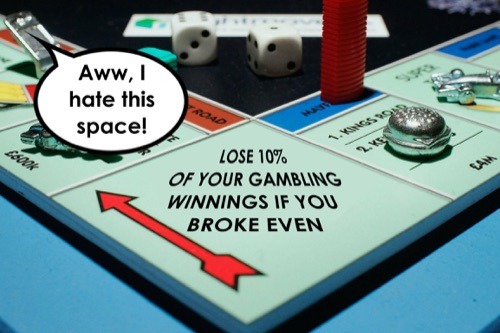
Changes to the way gambling winnings are taxed in the United States have been in the news recently. In summary, as of January 1, 2026, U.S. taxpayers can write off up to 90% (down from 100%) of their documented gambling losses against their winnings, meaning that some people could owe tax even if they “break even” in a calendar year. Efforts in Congress to undo the 90% cap (with catchy names like the FAIR BET Act and the FULL HOUSE Act) have yet to gain real traction. Additional changes, like a tweak to slot-reporting which aims to raise the W-2G threshold to $2,000 and index it to inflation, won’t kick in until the IRS updates its regulations, so casinos will continue issuing W-2Gs at $1,200 for now.
Earlier this month, Meta unveiled a sweeping rewrite of its “Online Gambling & Gaming” advertising standard, quietly posting an update that forces every gambling advertiser - from operators and affiliates to one‑off influencers - to pass through a new verification portal before a single Facebook or Instagram ad can run.
If you are reading this (and aren’t related to me), it’s probably because you're interested in the Canadian gaming landscape and maybe even Canadian gaming law. If that’s the case, then you’re likely familiar with the Bodog case in Manitoba. A few weeks ago, Justice Harris released his reasoning in the Bodog case, granting the applicant, Manitoba Liquor and Lotteries, everything it asked for. If you’re an operator in the Canadian market (excluding Ontario) or supplying goods and services to operators in this market, this decision may impact you. How? You’ll have to read below (or generate an AI summary of this article) to find out.
On June 30, 2025, the Canadian federal government announced that it would withdraw the Digital Services Tax (DST) before the first payments were due. Finance Minister François‑Philippe Champagne confirmed that legislation to rescind the Digital Services Tax Act will be tabled “in the coming days,” and the Canada Revenue Agency will not require returns or collect any amount that would have fallen due this summer.
Earlier this year, the Ontario Securities Commission (OSC) levied a CAD $200,000 administrative penalty - plus CA$25,000 in investigation costs and a USD $22,966.75 disgorgement order - against the companies behind Polymarket, the high-profile crypto-prediction platform, ending a months-long enforcement action that reached the province’s Capital Markets Tribunal on April 14 and was approved on April 17, 2025.
If you’re paying attention to the Canadian gaming scene, you’re aware that the Manitoba Court of King’s Bench granted an injunction prohibiting Bodog (operated by Il Nido Inc.) from offering or advertising online gambling services to Manitoba residents.

Bill 48 (the iGaming Alberta Act) cleared its third reading on May 7 and received Royal Assent on May 15, 2025. It will come into force on proclamation and create a Crown agent - the Alberta iGaming Corporation - to contract with private-sector casinos and sportsbooks. At the same time, Alberta Gaming, Liquor and Cannabis (AGLC) will keep its role as a regulator.
AI can write your emails, generate your vacation photos, and now - apparently - convince you to place a bet. As generative tools go mainstream, the gambling industry is starting to deploy them not just for backend efficiencies, but as the face of their ads. Literally.

In Ontario's regulated iGaming market, the Alcohol and Gaming Commission of Ontario (AGCO) has been clear that operators are accountable for the conduct of their affiliates. When those affiliates cross a regulatory line, the operator is responsible for the financial penalties.
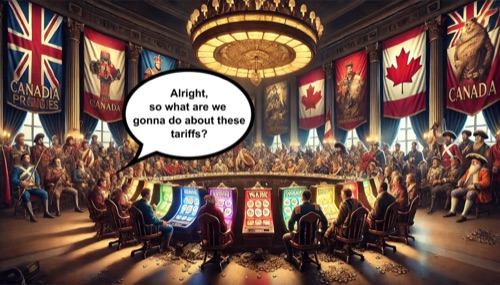
Canada’s trade war with the U.S. continues to escalate, and provinces across Canada are implementing measures to reduce reliance on American goods. The rising conflict has the potential to reshape industries on both sides of the border and the gaming industry has not been immune to the fallout from the ongoing tensions.

As some of you may already know from reading last week’s article, Manitoba Liquor & Lotteries (“MBLL”) has taken legal action against offshore gambling operator Bodog, seeking to block its services in the province. MBLL, alongside the Canadian Lottery Coalition (“CLC”), filed an injunction with the Manitoba Court of King’s Bench, arguing that Bodog’s operations violate provincial gaming laws and divert revenue from Manitoba’s sole legal iGaming platform, PlayNow.com.
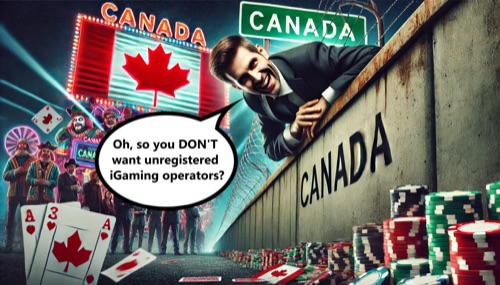
Provincial lottery corporations have been lamenting the presence of iGaming operators in their provinces since the early days of iGaming. However, despite a significant amount of grumbling, the provincial lottery corporations haven’t taken sufficient action to stop these sites.
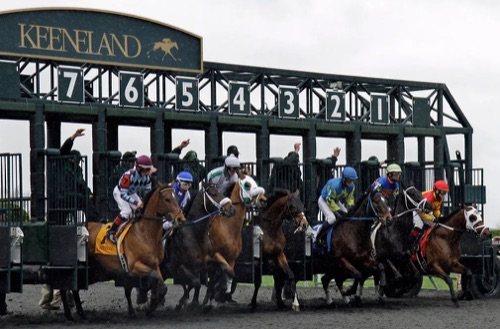
The year was 1967. The first national anti-Vietnam war protest was held in Washington, D.C., the Toronto Maple Leafs won their last Stanley Cup by defeating the Montreal Canadiens in 6 games, and two Canadian taxi drivers with entrepreneurial tendencies were about to start a business that would lead to the legalization of off track betting in Ontario, and two changes to the gaming and betting provisions of the Criminal Code (Code).
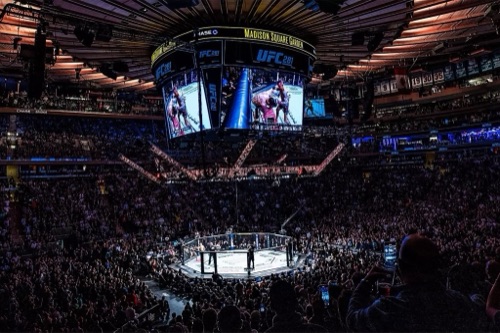
On December 6, 2022 we wrote about the decision of the Alcohol and Gaming Commission (AGCO) to establish a blanket prohibition on UFC betting. We set out four takeaways and our general view was that the decision to prohibit UFC demonstrated the AGCO's commitment to player protection and integrity. We also noted that the prohibition would likely be temporary and, that as long as the ban was in place, the Ontario unregistered market would get a boost.

Major DFS sites announced last week that they will no longer offer DFS to players in Ontario “due to a change in government regulations”. For obvious reasons, DFS players in Ontario are upset.