
The Splash-ification of Survivor and Pick ‘Em Pools
How Splash Sports changed the way survivor and pick ’em pools are run, and how its Canadian contests are structured as sweepstakes.
Home / Insights
Insights
Articles and analysis on gambling, media, and entertainment law from GME Law.
Showing 218 of 218 articles

How Splash Sports changed the way survivor and pick ’em pools are run, and how its Canadian contests are structured as sweepstakes.
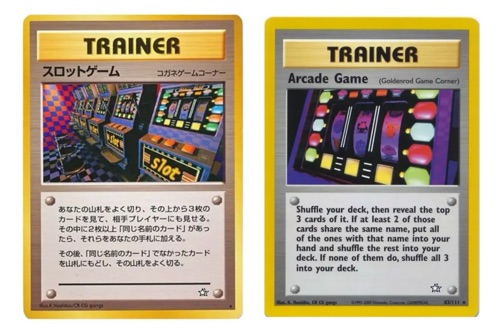
The hobby of collecting cards has been around for more than a century. In the “early days,” collectible cards were largely marketed to children. Today, adult collectors are turning the hobby into a career by trading valuable cards in secondary markets and using repacking platforms with gambling-like elements. At GME Law, we have prepared a series of articles examining different aspects of the hobby. In particular, we explore whether repacking platforms and physical booster packs may constitute forms of gambling with a focus on Pokémon cards.
Lawyers love to point out nuanced distinctions in technical terms, like the difference between a robbery and a burglary, or between a representation and a warranty. Most of these distinctions won’t have much impact on the day-to-day life of your average person.

Wealthsimple Predict went live on July 29, around four months after CIRO published the terms under which authorized investment dealers could offer event contracts to Canadian clients, and about a month after Wealthsimple first announced the app. Predict runs on Kalshi’s exchange and gives Canadians access to roughly 4,000 event contracts, confined to CIRO’s three permitted topics – economic indicators, financial markets, and climate. Other popular categories, like sports, elections and entertainment, are off the tradable list.
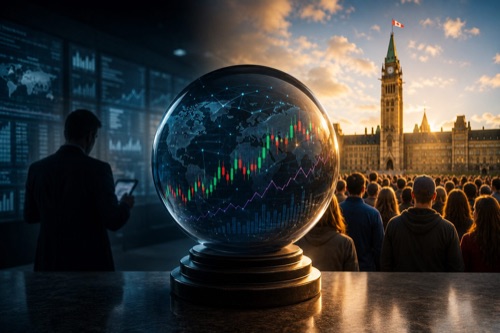
Prediction markets have a structural issue that geofencing can’t solve: someone, somewhere, usually knows how a contract will resolve before the rest of the market does. That problem was demonstrated earlier this month, when Reuters reported the CFTC was investigating a longtime White House teleprompter operator for allegedly trading on Kalshi “mention markets” – contracts that pay out based on whether a specific word or phrase gets said during a public event. Once betting extends into speeches, weather, and economic data the definition of who counts as an insider expands too: a speechwriter, a data provider, a government employee, or anyone else standing close enough to the outcome to know it before it happens can all take advantage of insider knowledge.

The 2026 FIFA World Cup is a fantastic opportunity to showcase the strength of Canada’s regulated sports betting market. Canada is co-hosting the tournament with the United States and Mexico. The World Cup runs from June 11 to July 19, 2026, with 48 countries, 104 matches across 16 cities, 13 of which will be hosted in Canada. Toronto will host six matches and Vancouver will host seven.
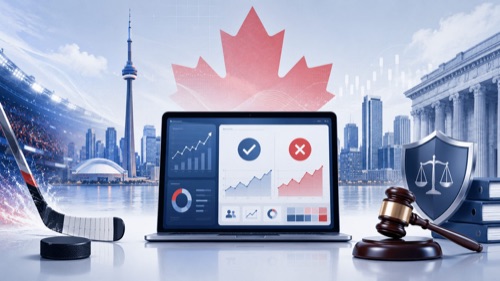
In April, we wrote about Canada’s emerging prediction market framework and the narrow path regulators appeared prepared to allow. Since then, prediction markets have continued to make headlines here in the Great White North and abroad. This article aims to provide an overview of the latest news related to prediction markets, with a focus on retail platforms educating investors, mainstream media covering younger-user interest, sports leagues responding to integrity risks, and overseas regulators pushing back against a product that they view as plain ol’ gambling.

The April newscycle has been a busy one for Canadian gambling updates. When I sat down to write this article, three main stories caught my eye. On the one hand, I could have written about two key pieces of legislation, aimed at changing Canada’s gambling advertising regulations at the federal and provincial levels, which have been progressing through their respective Houses. On the other hand, I could have covered how iGaming Ontario (“iGO”) recently announced the launch of BetGuard, a centralized self-exclusion program that would fill a gap in Ontario’s responsible gaming framework. And, on a third hand (where’d that come from?), I felt obligated to discuss how Alberta and Quebec have been given the go-ahead to participate (on opposing sides) in the Supreme Court of Canada appeal over whether Ontario can lawfully allow peer-to-peer online gambling liquidity for activities like poker and daily fantasy.
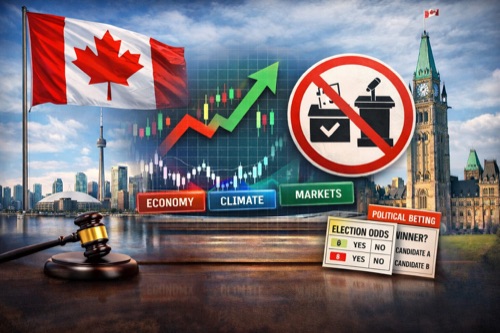
Recent developments in Canada suggest regulators are beginning to change their views around prediction markets. A March 26 bulletin from the Canadian Investment Regulatory Organization (“CIRO”) on event contracts, together with the approval allowing Wealthsimple and Interactive Brokers Canada to facilitate trading in a limited subsection of those products, indicates that Canada is prepared to permit some event-based contracts, but only on narrow and carefully controlled terms. Certain topics, such as predictions on the outcome of sporting events (a massive industry in the U.S.), will not be permitted in Canada.
In this week’s GME3, Alberta is looking to get a seat at the table in a Supreme Court fight that could shape whether Canada’s regulated iGaming markets can pursue cross-border player pooling for products like online poker and daily fantasy sports. In the UK, the government has backed away from a controversial proposal that would have made it easier for AI companies to train on copyrighted works without permission. And the latest World Happiness Report suggests that not all social media is created equal, with doomscroll-heavy, algorithm-driven platforms appearing to hit mental health harder than apps built more around direct social connection. Read the full stories below!
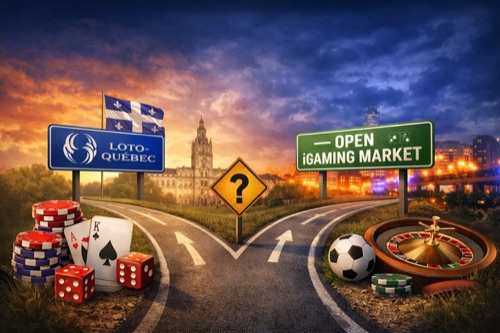
In early February 2026, a group of major private-sector iGaming operators, known as the Québec Online Gaming Coalition (“QOGC”), filed a brief as part of Québec’s 2026-2027 pre-budget consultations, publicly urging the province to create a Québec-specific regulatory framework for iGaming activities, like casino games and sports betting. QOGC’s argument can be broken down into three main points: (i) Québecers are already playing online across a large range of (unregulated) sites, (ii) unregulated iGaming weakens consumer protection, and (iii) Québec is leaving significant tax revenue on the table by not licensing and taxing commercial operators.

In this week’s GME3, PrizePicks is packing up and leaving Canada, highlighting the limits of trying to scale fantasy sports in a fragmented and heavily regulated market. At the same time, a proposed U.S. class action against Allstate is putting a spotlight on just how much driving data insurers and their tech partners may be collecting, and whether consumers really understand the trade they are making. And in Ottawa, the federal government is weighing new restrictions on young people’s access to social media, adding Canada to a growing global debate over how far lawmakers should go to protect kids online. Read the full stories below!
In this week’s GME3, a new Canadian Medical Association Journal study points to a sharp post-2022 spike in gambling-related calls to ConnexOntario, especially among young men. TikTok is openly declining to roll out end-to-end encryption for DMs so it can better police harm, a move child-safety groups are applauding and privacy advocates are questioning. And in the U.S., the Supreme Court has (for now) declined to hear a case determining whether fully AI-generated art can be copyrighted at all, leaving the current “human authorship required” line intact. Read the full stories below!

If you’re a gaming operator thinking about a Canadian expansion, Ontario and Alberta are likely at the top of your list. However, it would be a mistake to approach all Canadian provinces the same way. Some key distinctions between these provinces mean these jurisdictions are two very different environments that happen to share a federal Criminal Code backdrop. Ontario is already a mature, competitive, regulated online market with clear rules and plenty of data. Alberta, meanwhile, is the new kid on the block - a large, fast-growing, and high-income province where iGaming is currently channelled through the government-run Play Alberta, and where a competitive framework is now moving from strategy to implementation (including an application process and standards announced earlier this year).
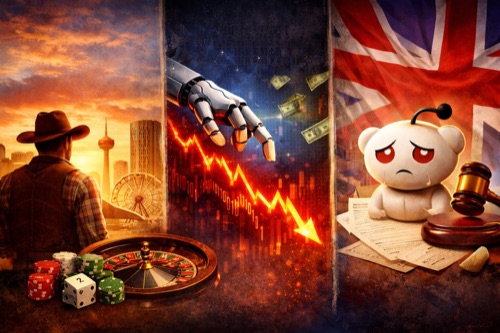
In this week’s GME3, Alberta’s regulated iGaming market looks like it’s heading toward a real launch window with officials now pointing to late spring or early summer 2026, a viral AI-collapse scenario has rattled U.S. equities, and the UK’s privacy regulator has fined Reddit £14.47 million over children’s data and age assurance. Read the full stories below!
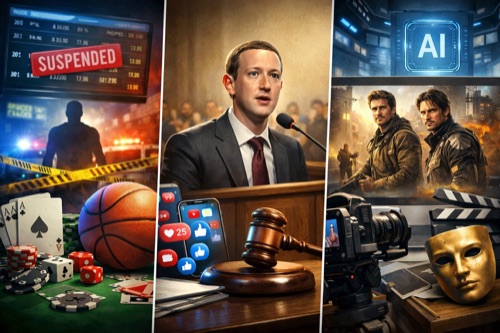
In this week’s GME3, Ontario’s gambling regulator is moving to temporarily suspend PointsBet Canada’s iGaming registration, saying the operator missed and failed to report suspicious wagering tied to the Jontay Porter betting scandal. In the U.S., Meta is in court as plaintiffs argue Instagram and other platforms were intentionally designed to be addictive for young users, with Mark Zuckerberg testifying about what the company knew and when. And in entertainment news, ByteDance is catching heat from Hollywood and performers’ groups over its new AI video generator, with critics warning it could supercharge copyright infringement and unauthorized use of actors’ likenesses. Read the full stories below!
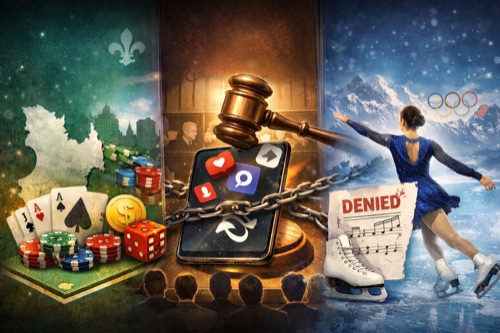
In this week’s GME3, Québec’s online gambling debate is back in the spotlight, with an industry coalition telling the province’s finance ministry that the current “Loto-only” approach is bleeding both consumer protection and tax revenue as players keep drifting to offshore sites. In the U.S., a bellwether “youth harms” trial is putting Big Tech’s design choices under a microscope, with plaintiffs arguing features like infinite scroll were built to hook minors. And over in Milan Cortina, the Olympics’ figure skating events have a surprise antagonist: copyright clearance, as skaters scramble to secure last-minute approvals (or ditch planned music entirely). Read the full stories below!

In this week’s GME3, York Regional Police’s Project Scala takes down an illegal gambling ecosystem involving cash, crypto, contraband, and “gaming houses” - with a cameo from a man known as “Frank the Tank.” In Europe, X and Grok are under intensifying scrutiny over alleged harmful outputs and data practices, with regulators in France, the UK, and Canada all in the mix. And in Spain, Pedro Sánchez is pushing a blunt under-16 social media ban and tougher rules on algorithm-driven harms, as the country prepares for a major fight over age verification and platform accountability. Read the full stories below!
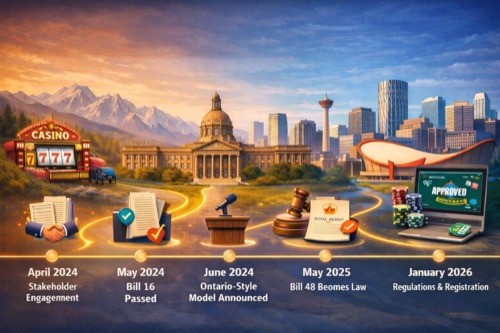
Alberta’s move toward a regulated iGaming market has followed a predictable trajectory: beginning with early signalling and stakeholder engagement, followed by enabling legislation, and finally, once the legal structure was in place, publishing operational documents and launching registration for prospective operators.
In this week’s GME3, an interview with Minister of Service Alberta and Red Tape Reduction Dale Nally sheds some light on Alberta’s plans for launching its regulated iGaming market in 2026. Meanwhile, in the U.S., TikTok has tapped out of a high-stakes “social media addiction” case at the last possible second, leaving Meta and Google to defend their algorithms in front of a jury. And back home, TikTok is facing fresh heat from Canada’s Privacy Commissioner over whether recent privacy policy updates - including more granular location tracking and references to sensitive data categories - will change what Canadian users are handing over when they scroll. Read the full stories below!
On January 13, 2026, Alberta’s competitive iGaming market officially moved out of the “concept deck” phase. Alberta Gaming, Liquor & Cannabis (“AGLC”) published an iGaming bulletin confirming that its Standards and Requirements for Internet Gaming (the “Standards”) had been published, and the application process would be made available for operators and suppliers. The Standards are the clearest snapshot so far of how Alberta plans to regulate and operationalize online gaming.
In this week’s GME3, York Regional Police say a retired Toronto officer is facing charges tied to an alleged credit-based illegal gambling ring where debts were allegedly collected with threats and violence; Ottawa is reportedly weighing a tougher age gate as part of a revamped online harms bill, including a possible social-media ban for kids under 14 (and the question of who would enforce it); and in the U.S., Snap has quietly stepped out of a looming “tech addiction” trial by settling, while Meta, TikTok, and YouTube stay in the hot seat. Read the full stories below!
In this week’s GME3, Ontario’s regulator serves up one of its biggest fines yet as the AGCO penalizes FanDuel over suspicious table tennis betting and spotlights sports integrity as the next enforcement frontier; California’s attorney general turning the spotlight on xAI as Grok faces growing scrutiny over deepfake abuse; and, in New York, a post–City Hall crypto saga as allegations swirl that Eric Adams’ “NYC Token” hype may have ended in a classic rug-pull-style wipeout. Read the full stories below!

Alberta’s regulated iGaming market is officially taking shape, and if you’re an operator or supplier eyeing a launch, the window to get moving is already open. The province is building an “Ontario-style” framework, and the guidance released by the regulator yesterday includes details on their dual-track onboarding process, revenue-share model, and early signs that the rules for land-based casinos may be evolving in parallel. This article walks through what we know so far about how entry into Alberta will actually work in practice, starting with which government entities you need to talk to, what the application steps look like, and the key details that could affect your timeline and strategy.
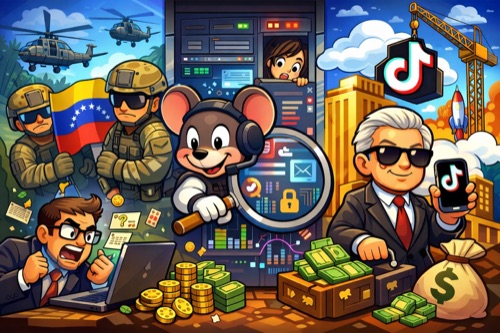
In this week’s GME3, Polymarket is now facing backlash for saying a “snatch-and-extract” mission that captured Nicolás Maduro still doesn’t count as an “invasion” for settlement purposes. Meanwhile, Disney is catching heat in California over ESPN.com’s alleged use of tracking tech that plaintiffs say operates like illegal “pen register” tools under the state’s Invasion of Privacy Act. And, TikTok’s U.S. future is reportedly headed toward an Oracle-led restructuring timed to beat the ban-or-sell deadline, raising fresh questions about control, moderation, and what exactly is being bought. Read the full stories below!
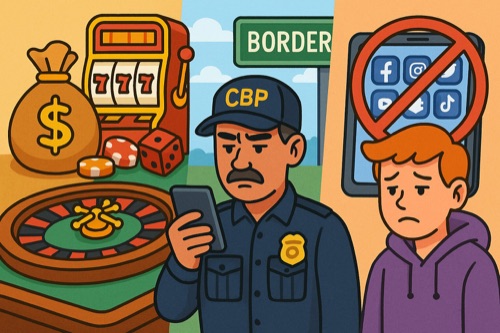
In this week’s GME3, the topic of First Nations gaming authority has returned to the Canadian Senate in the form of Bill S-241, a new proposal could make it mandatory for many short-term visitors entering the U.S. to share up to five years of social media activity, and in the wake of Australia’s under-16 social media ban going into effect Canadian experts question if a similar approach could be taken here. Read the full stories below!
Prediction markets have had a strange couple of weeks in the spotlight, and the recent controversy related to the popular game Roblox hasn’t helped. On a recent appearance on the Hard Fork podcast, Roblox CEO David Baszucki suggested that adding prediction markets for kids inside the platform would be a “brilliant idea,” as long as it could be done in an “educational way that’s legal.” He floated a game like “Dress to Impress Predictor,” where kids would forecast which avatar wins a fashion contest and stake something of value on the outcome, but with no monetary prizes or “free Robux.”
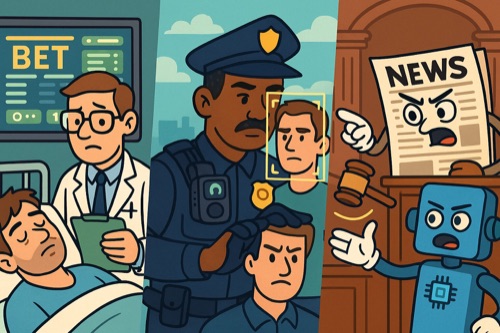
In this week’s GME3, a Windsor hospital CEO is sounding the alarm on what he calls a growing public-health crisis driven by wall-to-wall sports betting ads; in Edmonton, police are pressing ahead with AI-powered facial-recognition bodycams despite the province’s privacy commissioner warning they’re offside the law; and in Ontario, a coalition of major news publishers has cleared an early legal hurdle in its copyright lawsuit against OpenAI, keeping the high-stakes fight over AI training data in a Canadian courtroom. Read the full stories below!
In this week’s GME3, over 40 Canadian senators have written an open letterr to the Prime Minister arguing for a nationwide ban on sports betting ads, Australia’s looming social media ban faces a constitutional challenge mere weeks before it’s scheduled to take effect, and Warner Music Group has settled its copyright infringement lawsuit against the AI music startup Suno, clearing the way for Suno to launch licensed AI models starting next year. Read the full stories below!
In this week’s GME3, Ontario’s regulated iGaming market hit another new milestone in the month of October, Ontario and Alberta privacy commissioners announce that the PowerSchool data breach revealed major privacy shortcomings from school boards, and a U.S. federal judge has handed Meta a major legal victory in an ongoing antitrust case. Read the full stories below!
In this week’s GME3, the Ontario Court of Appeals has ruled that international liquidity sharing in the province would, in fact, be lawful, OpenAI’s new Sora 2 video app draws criticism over potential issues including promoting misinformation, deepfakes, and privacy violations, and a Munich court has ruled that OpenAI infringed copyright by using song lyrics to train its models and by enabling their reproduction in ChatGPT outputs. Read the full stories below!
In this week’s GME3, the UFC’s Isaac Dulgarian bout has triggered an integrity probe - with IC360 alerts, sportsbooks issuing refunds, the Nevada commission withholding his purse, and Dana White saying the FBI is now involved. In the media world, Stability AI (largely) fended off Getty in the U.K., a decision that narrows trademark issues while undercutting broader copyright claims tied to model training. And in entertainment news, Ottawa’s new budget boosts CBC/Radio-Canada, explores a Canadian debut at Eurovision, and channels fresh funding to music, film, and local journalism. Read the full stories below!
After its launch in 2023, Counter-Strike 2 (“CS2”) - the sequel to Counter-Strike: Global Offensive (“CS:GO”) - quickly became the most popular game on the hosting platform Steam, holding the all-time concurrent player record of 1,862,531 as of the writing of this article. CS2’s success has led to it being one of the most-streamed games on Twitch, as well as hosting massive global tournaments that bring in millions of viewers.
In this week’s haunted edition of the GME3, we’re looking at three spooky stories from the gambling, media, and entertainment worlds. First, Stake, alongside sponsored advertising partners Drake and Adin Ross, is facing a lawsuit in Missouri over allegedly promoting illegal online gambling through the platform Stake.us. Next, President Donald Trump’s social media company, Truth Social, announced plans to launch a new prediction betting marketplace. And finally, major social media companies have now pledged to comply with Australia’s under-16 social media ban, which is scheduled to begin in December. Read the full stories below!
In this week’s GME3, the Canadian Senate has now passed Senator Marty Deacon’s sports betting ad bill for a second time, a new study from European broadcasters reveals the true scope of “hallucinations” that AI assistants can present to users about news content, and a California judge has ordered major social media company CEOs to testify over the alleged harm social media causes to young users. Read the full stories below!
Prediction markets have been taking up a significant amount of oxygen in the U.S. gaming space. My current favourite reads on the topic are 50¢ Dollars, by Adhi Rajaprabhakaran, an early (former) Kalshi employee and pro prediction market trader, and The Event Horizon by gaming industry veteran Dustin Gouker.
In this week’s GME3, a Canadian Senate committee quietly advanced Bill S-211, which would create a national framework to rein in the flood of sports betting ads since legalization. Meanwhile, Ottawa is set to re-table its controversial border-security bill in a trimmed-down form, stripping out the surveillance powers that sank its predecessor. And overseas, Denmark has unveiled a proposal to ban social media for children under 15, joining a growing global push to protect young users from the darker side of digital life. Read the full stories below!
In this week’s GME3, we’re looking at the most recent report on the success of Ontario’s iGaming market, a landmark $1.5 billion settlement in the copyright case between AI company Anthropic and a coalition of authors and publishers, and a Canadian lawsuit launched against Roblox, alleging that the platform is deliberately designed to be addictive and financially exploitative towards children. Read the full stories below!
In this week’s GME3, yet another fine against a provincial gaming operator by FINTRAC, OpenAI argues that an ongoing lawsuit brought by Canadian news publishers should be transferred to the U.S., and the Australian government publishes guidance on how social media companies should approach age verification as their under-16 ban looms. Read the full stories below!
In this week’s GME3, Canadian doctors are - once again - sounding alarms over the flood of sports betting ads during games, warning that they normalize gambling for children and risk fueling a new generation of addiction. Also in Canada, a $68-million federal project meant to modernize Canada’s asylum system collapsed without ever completing legally required privacy safeguards, raising fresh concerns about the safety of refugee claimants’ most sensitive data. And in France, lawmakers are taking aim at TikTok and other platforms, proposing bans for under-15s and digital curfews for teens after finding what they call an “ocean of harmful content” tied to self-harm and disordered behaviour. Read the full stories below!
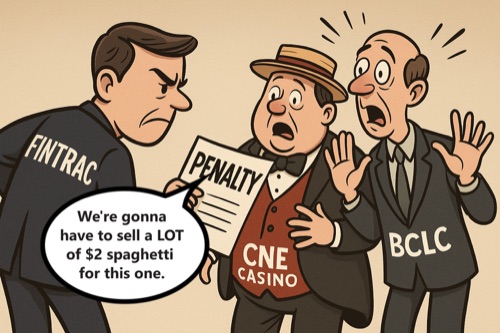
In the past month, the Financial Transactions and Reports Analysis Centre of Canada (FINTRAC) has issued two significant enforcement actions against major players in the country’s gambling sector: the Canadian National Exhibition (CNE) Casino (under the Canadian National Exhibition Association) and the British Columbia Lottery Corporation (BCLC).
In this week’s GME3, the BCLC challenges a penalty of over $1 million imposed by FINTRAC over alleged anti-money laundering failures, Canada’s Federal government launches an investigation into how a key privacy provision from the Online Safety Act was accidentally removed, and south of the border, Disney has agreed to a $10 million fine to the U.S. Federal Trade Commission for alleged violations of the Children’s Online Privacy Protection Act. Read the full stories below!

In this week’s GME3, Toronto’s summer fair casino finds itself on the hook for nearly $200,000 in anti–money laundering fines, the UK appears to have backed down from its push to force Apple into building an encryption back door, and Canadian politicians are pressing Meta to restore news access on its platforms after the ban’s impact was felt during recent wildfires. Read the full stories below!
In this week’s edition of the GME3, Ontario’s gambling scene is off to the races with OLG’s new deal to offer online horse betting through Woodbine Entertainment, while the media world is grappling with Google’s AI-powered search summaries that publishers say are cutting traffic and revenue. In entertainment, the copyright clash between Disney, Universal, and Midjourney is heating up, as the AI image generator pushes back with a fair use defence and accuses the studios of benefiting from the very tools they’re targeting. Read the full stories below!
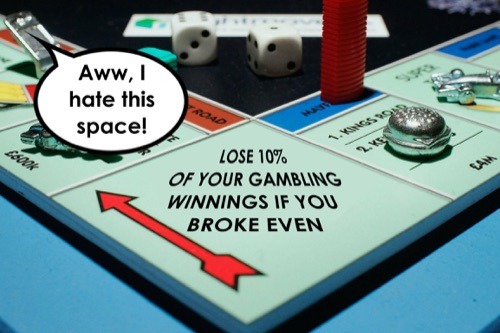
Changes to the way gambling winnings are taxed in the United States have been in the news recently. In summary, as of January 1, 2026, U.S. taxpayers can write off up to 90% (down from 100%) of their documented gambling losses against their winnings, meaning that some people could owe tax even if they “break even” in a calendar year. Efforts in Congress to undo the 90% cap (with catchy names like the FAIR BET Act and the FULL HOUSE Act) have yet to gain real traction. Additional changes, like a tweak to slot-reporting which aims to raise the W-2G threshold to $2,000 and index it to inflation, won’t kick in until the IRS updates its regulations, so casinos will continue issuing W-2Gs at $1,200 for now.
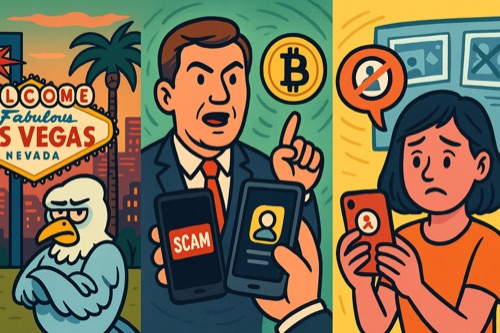
June tourist numbers show Las Vegas feeling the freeze as Canadian snowbirds stay home; Premier Scott Moe is battling a wave of AI deepfakes that hijack his likeness for crypto scams; and Ontario teacher Megan Conte just endured a week-long lockout from Instagram after an erroneous “child exploitation” flag erased 15 years of memories. This week’s GME3 unpacks why Canadian arrivals to Sin City have plunged 15 percent, how regulators are chasing phantom fraudsters behind Moe’s bogus ads, and what Conte’s ordeal tells us about Meta’s automated moderation. Read the full stories below!
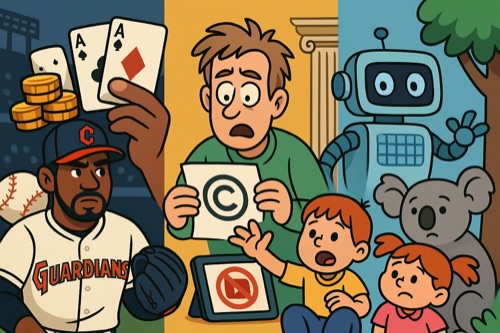
In this week’s GME3, Major League Baseball has benched star closer Emmanuel Clase amid a deepening betting probe. In Europe, creative workers are accusing the EU of failing to protect their rights under its landmark AI legislation. And in Australia, a dramatic policy reversal will see YouTube banned for under-16s, pitting regulators against tech giants once again. Read the full stories below!
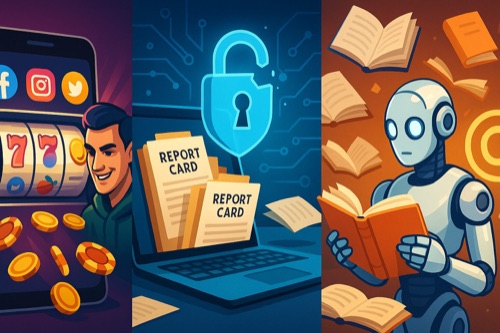
From fake casino ads flooding social media to student data breaches and AI copyright battles, this week’s headlines highlight the growing risks at the intersection of tech, trust, and regulation. Fraudsters are hijacking Canadian casino brands to run scam ads on Meta platforms, a major school software provider just paid ransom after exposing sensitive information, and authors are taking the AI company, Anthropic, to court for allegedly scraping millions of pirated books. Read the full stories here!
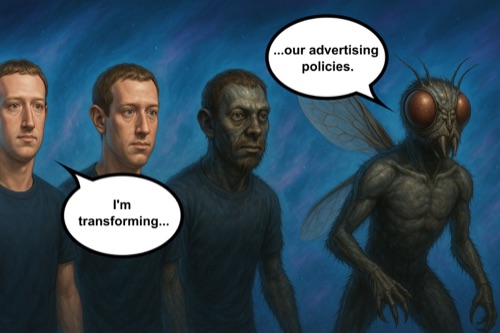
Earlier this month, Meta unveiled a sweeping rewrite of its “Online Gambling & Gaming” advertising standard, quietly posting an update that forces every gambling advertiser - from operators and affiliates to one‑off influencers - to pass through a new verification portal before a single Facebook or Instagram ad can run.
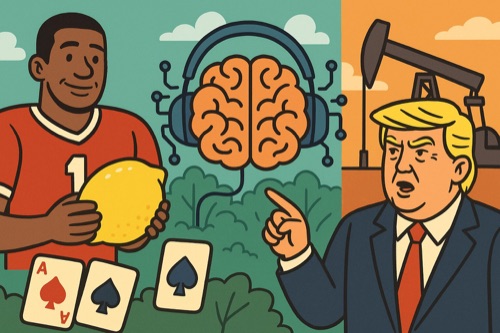
This week’s stories span the fields of sports, privacy, and energy policy. The CFL reinstates veteran defensive end Shawn Lemon following a suspension for gambling violations. In the U.S., several states are moving to regulate neural data as consumer neurotechnology and AI capabilities advance. Meanwhile, Donald Trump’s appearance at an AI and energy summit in Pennsylvania drew criticism for promoting fossil fuels as the future power source for artificial intelligence. Read the full stories below in this week’s GME3!
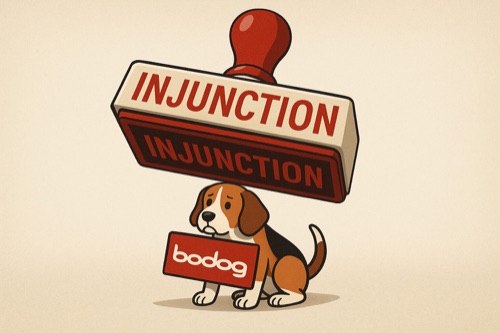
If you are reading this (and aren’t related to me), it’s probably because you're interested in the Canadian gaming landscape and maybe even Canadian gaming law. If that’s the case, then you’re likely familiar with the Bodog case in Manitoba. A few weeks ago, Justice Harris released his reasoning in the Bodog case, granting the applicant, Manitoba Liquor and Lotteries, everything it asked for. If you’re an operator in the Canadian market (excluding Ontario) or supplying goods and services to operators in this market, this decision may impact you. How? You’ll have to read below (or generate an AI summary of this article) to find out.
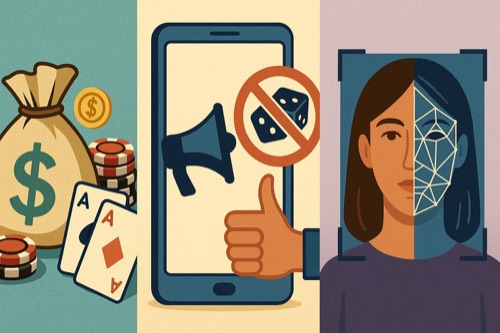
This week’s GME3 covers a trio of high-stakes developments across the gambling, media, and entertainment spheres. In the iGaming world, PointsBet’s Canadian division finds itself at the centre of a growing tug-of-war, as would-be buyers circle. Over in Silicon Valley, Meta quietly updates its gambling ad policies, raising new questions for affiliates and licensees alike. And in Denmark, lawmakers take aim at deepfakes with a bold proposal to enshrine your right to your own face. Read the full stories below!
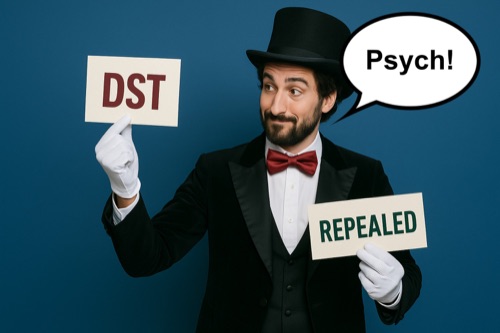
On June 30, 2025, the Canadian federal government announced that it would withdraw the Digital Services Tax (DST) before the first payments were due. Finance Minister François‑Philippe Champagne confirmed that legislation to rescind the Digital Services Tax Act will be tabled “in the coming days,” and the Canada Revenue Agency will not require returns or collect any amount that would have fallen due this summer.
This week’s GME3 covers Ontario’s iGaming market hitting record highs in May, renewed talk of a TikTok sale ahead of a looming U.S. deadline, and Riot Games officially allowing betting sponsorships for Valorant and League of Legends teams. Read the full stories below!
In this week’s GME3: Ontario signals a tougher stance on unlicensed gambling operators, a U.S. judge delivers a major ruling on AI and copyright, and Australia’s eSafety Commissioner pushes back on YouTube’s exemption from new youth restrictions. Catch up on the latest from the gambling, media, and entertainment worlds below.
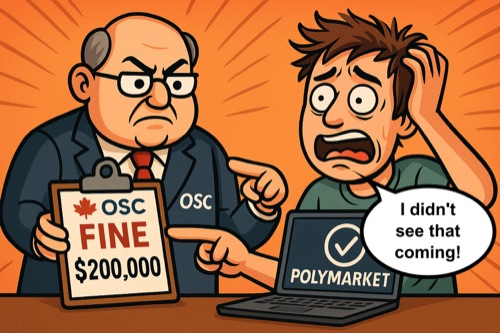
Earlier this year, the Ontario Securities Commission (OSC) levied a CAD $200,000 administrative penalty - plus CA$25,000 in investigation costs and a USD $22,966.75 disgorgement order - against the companies behind Polymarket, the high-profile crypto-prediction platform, ending a months-long enforcement action that reached the province’s Capital Markets Tribunal on April 14 and was approved on April 17, 2025.
This week’s GME3 is all about blurred lines - and who’s responsible for drawing them. A new report shows Alberta and B.C. gamblers are still flocking to the grey market, privacy regulators in Canada and the U.K. call out 23andMe for failing to protect genetic data, and X is suing New York over a law it says crosses the line on free speech. Read the full stories below!
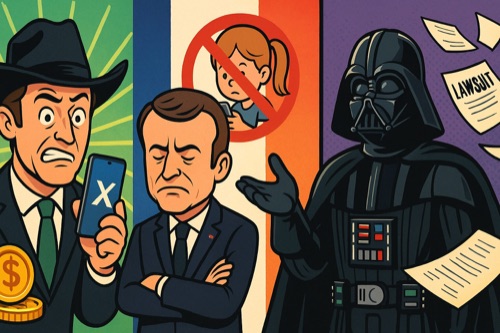
In this week’s edition of the GME3, we’re taking a look at Polymarket’s announcement of its official partnership with X (formerly Twitter), an announcement from French President Emmanuel Macron that he intends to move towards banning social media for children under the age of 15, and a massive lawsuit filed against AI company Midjourney by Disney, Universal, and other major Hollywood studios over alleged copyright infringement. Read the full stories below!
In this week’s edition of the GME3, we’re taking a look at a revived federal bill which could reshape how sports betting ads appear across the country. Meanwhile, Ontario lawmakers and school boards are ramping up scrutiny of social media’s effects on youth, both in policy and the courts. And in Michigan, Eminem’s publishers are taking Meta to task over alleged copyright violations, in a case that could redraw the boundaries of music use on social platforms. Read the full stories below!
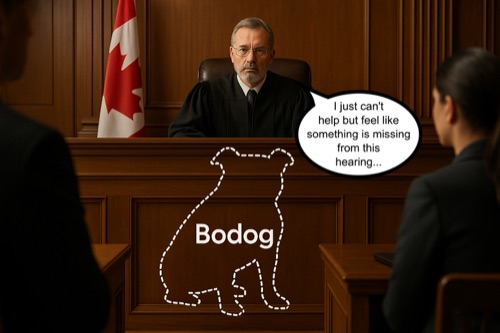
If you’re paying attention to the Canadian gaming scene, you’re aware that the Manitoba Court of King’s Bench granted an injunction prohibiting Bodog (operated by Il Nido Inc.) from offering or advertising online gambling services to Manitoba residents.
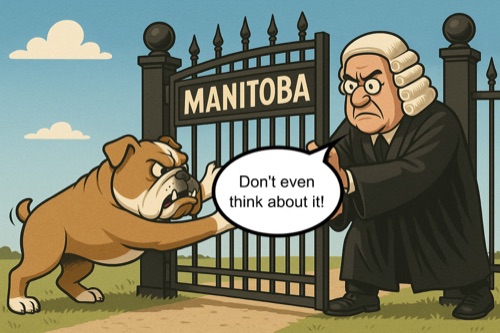
In this week’s edition of the GME3, we have an update on the Manitoba court case against Bodog, a new investment tactic being explored by President Donald Trump’s social media company, Trump Media & Technology Group, and pressure on Canada’s broadcast regulator, the CRTC, to uphold and strengthen rules defining what qualifies as Canadian content in television and streaming as international corporations lobby to loosen restrictions. Read the full stories below!
Bill 48 (the iGaming Alberta Act) cleared its third reading on May 7 and received Royal Assent on May 15, 2025. It will come into force on proclamation and create a Crown agent - the Alberta iGaming Corporation - to contract with private-sector casinos and sportsbooks. At the same time, Alberta Gaming, Liquor and Cannabis (AGLC) will keep its role as a regulator.
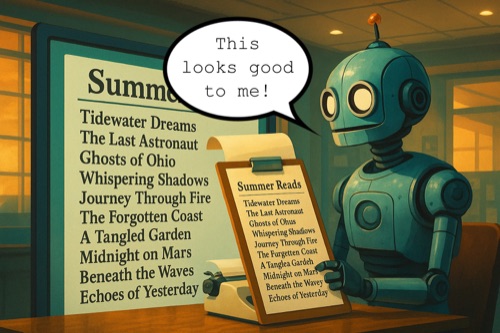
In this week’s GME3, we’re taking a look at the separation of iGO from the AGCO by the iGaming Ontario Act, a recent Alberta court ruling which has declared parts of the province’s privacy law unconstitutional, and the latest AI scandal, in which a Chicago news outlet published a summer reading list including books that don’t actually exist. Read the full stories below!
In this week’s edition of the GME3, we’re looking at an announcement from the AGCO pressuring media outlets to stop carrying ads for unlicensed gaming sites, a $1.4 billion fine levied against Google in Texas over privacy violations, and the dismissal of the head of the U.S. Copyright Office, only days after her office released a report raising concerns about the use of copyrighted materials to train AI models. Read the full stories below!
In this week’s edition of the GME3, we’re looking at concerns coming from Canadian mental health experts surrounding the impact that gambling-like features in video games, like loot boxes, are affecting the youth, proposed legislation in New Zealand that would ban users under the age of 16 from accessing social media, and a $25 million copyright suit being brought against U.K.-based hosting provider Innetra PC in California. Read the full stories below!
For this week’s GME3, we’re looking at iGaming Ontario’s numbers in its third full operating year, an Alberta-based “finfluencer” who is being sanctioned for failing to disclose paid promotions to his followers, and controversy surrounding a team of researchers who secretly deployed AI bots on Reddit to influence discussions on the platform, without users’ knowledge or consent. Read the full stories below!
AI can write your emails, generate your vacation photos, and now - apparently - convince you to place a bet. As generative tools go mainstream, the gambling industry is starting to deploy them not just for backend efficiencies, but as the face of their ads. Literally.
In this week’s GME3, we’re looking at an update on the status of Alberta’s Bill 48 (the iGaming Alberta Act), an investigation by the Ontario Securities Commission into the growing influence of financial influencers, or “finfluencers,” and a report detailing the rise of esports betting over the course of 2024. Read the full stories below!

In Ontario's regulated iGaming market, the Alcohol and Gaming Commission of Ontario (AGCO) has been clear that operators are accountable for the conduct of their affiliates. When those affiliates cross a regulatory line, the operator is responsible for the financial penalties.
In this week’s edition of the GME3, we’re taking a look at the debate over the Alberta iGaming Corporation Act in the provincial assembly, the announcement that Nvidia plans to invest up to $500 billion in U.S.-based artificial intelligence infrastructure over the next four years, and Mark Zuckerberg’s testimony in Meta’s high-profile antitrust trial. Read the full stories below!
The online payments space is chaotic. Companies evolve and expand quickly. Processing chain roles get blurred. The branding is slick, and the legal language rarely keeps up with the pace of financial engineering.
In this week’s edition of the GME3, we’re taking a look at the financial impact that new U.S. tariffs are having on the gambling sector, controversy surrounding AI technology that’s potentially being used to enhance government surveillance efforts, and another 75-day extension on the TikTok ban due to tariffs. Read the full stories below!
Welcome to the Wild West
In this week’s GME3, we’re looking at iGaming Ontario’s monthly report highlighting the growth of Ontario’s regulated market, a hefty fine levied against Apple by France’s antitrust regulator, and controversy surrounding yet another million-dollar voter giveaway by Elon Musk. Read the full stories below!
Welcome back to the GME… 4? We had this week’s edition ready to go when the Alberta government announced the iGaming Alberta Act, and some last-minute changes became necessary. In addition to that story, this week we’re also discussing the potential privacy impact of 23andMe’s Chapter 11 bankruptcy proceedings, the spread of misinformation on social media in the leadup to Canada’s impending federal election, and (honourable mention to this week’s original gambling story) a $110,000 fine levied by the AGCO against BetMGM. Read the full stories below!

In this week’s GME3, Alberta is gearing up for a long-awaited expansion into online gambling, AI-generated content continues to run into copyright roadblocks, and internet personality Dan Bilzerian finds himself in a legal standoff in B.C. over an Instagram account. Read the full stories below!
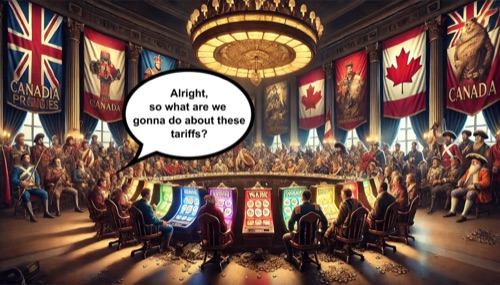
Canada’s trade war with the U.S. continues to escalate, and provinces across Canada are implementing measures to reduce reliance on American goods. The rising conflict has the potential to reshape industries on both sides of the border and the gaming industry has not been immune to the fallout from the ongoing tensions.
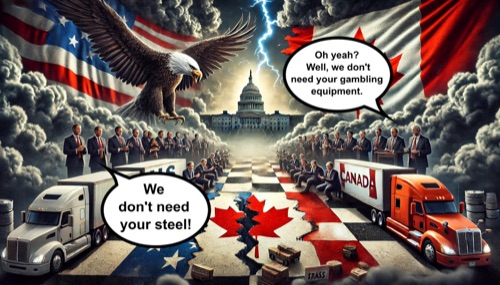
For this week’s GME3, provincial governments are taking bold steps to counter trade tensions with the U.S., reshaping how gaming equipment is sourced. Meanwhile, school boards are taking on tech giants over the impact of social media on students, and investigations reveal troubling gaps in child data protection within mobile games. Read the full stories below!
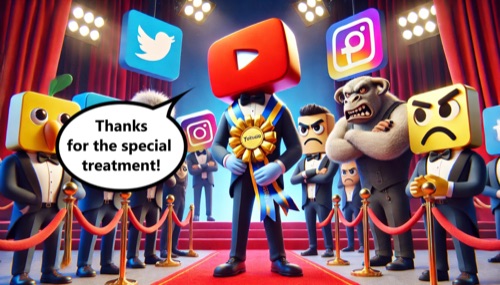
In this week’s GME3 we’re looking at Fitzdares announcement that they intend to withdraw from the Ontario market, outrage over the exemption of YouTube from Australia’s social media ban for users under the age of 16, and an investigation from the U.K.’s Information Commissioner’s Office into how social media platforms handle children's data. Read the full stories below!

A potential PointsBet acquisition, a record-breaking crypto heist, and a legal win for X - this week’s GME3 showcases major shifts across gambling, finance, and tech. PointsBet Canada’s parent company is set to be acquired by MIXI Australia in a CAD $320 million all-cash deal, solidifying its focus on the Australian and Canadian markets. Meanwhile, the crypto firm Bybit finds itself at the center of the largest crypto theft in history, with hackers siphoning $1.5 billion from its Ethereum wallet. Over in California, Elon Musk’s X has successfully pushed back against a transparency law, scaling back state-mandated disclosures on content moderation. Read the full stories below!
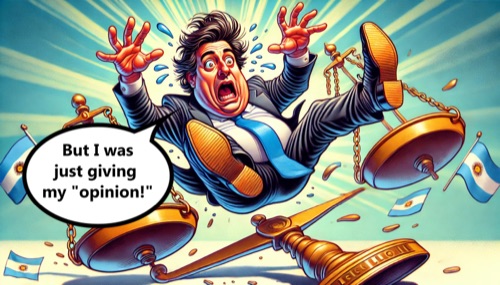
2025 is looking to be the year of the politically motivated meme-coin scheme (say that 10 times fast). Only last month I was writing about the launch of $TRUMP, $MELANIA, and, most importantly, $LORENZO in the leadup to the 47th President’s inauguration. While $TRUMP has certainly lost some value since its all-time high - from being valued at over $73 per coin on January 23, 2025, to now being worth only ~$15 per coin - it appears that it has held on to enough value for it not to be considered an outright scam.
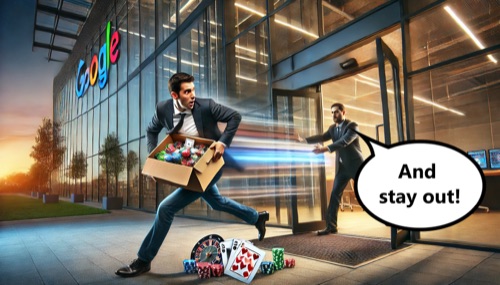
In this week’s GME3, regulators are tightening the reins on digital platforms from online gambling crackdowns to cybersecurity failures and social media age restrictions. Google’s latest policy update bans social casino advertising, reflecting growing legal pressure on Big Tech’s role in digital gambling. Meanwhile, Nova Scotia’s privacy watchdog has criticized the government’s handling of a massive cybersecurity breach, exposing weak security practices. And in Australia, a new report highlights how easily children bypass social media age limits, raising questions about the effectiveness of upcoming restrictions. As tech companies face increasing scrutiny, these developments signal a shifting landscape for digital regulation. Read all three stories below!

As some of you may already know from reading last week’s article, Manitoba Liquor & Lotteries (“MBLL”) has taken legal action against offshore gambling operator Bodog, seeking to block its services in the province. MBLL, alongside the Canadian Lottery Coalition (“CLC”), filed an injunction with the Manitoba Court of King’s Bench, arguing that Bodog’s operations violate provincial gaming laws and divert revenue from Manitoba’s sole legal iGaming platform, PlayNow.com.

This week in the GME3, we’re looking at a warning from the OPP about online scams targeting Canada’s gaming industry, a rejected bid for the purchase of AI powerhouse OpenAI from Elon Musk, and controversy surrounding superstar Kanye West’s latest internet tirade, leading to him being dropped by several brands. Read the full stories below!
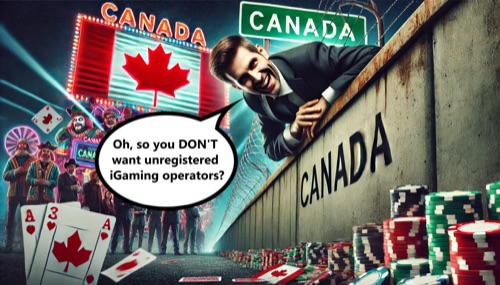
Provincial lottery corporations have been lamenting the presence of iGaming operators in their provinces since the early days of iGaming. However, despite a significant amount of grumbling, the provincial lottery corporations haven’t taken sufficient action to stop these sites.
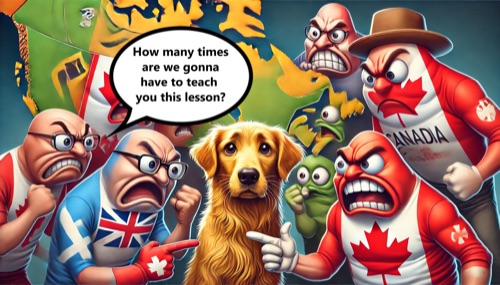
In this week’s GME3, we‘re looking at an attempt to gain an injunction against the offshore gambling site Bodog in Manitoba, a determination from the U.S. Copyright Office clarifying how AI can be used in copyrighted works, and the expansion of the social media platform X’s lawsuit against advertisers to include brands like Lego, Nestlé, Pinterest, and more. Read the full stories below!

If you’ve been dumped by Stripe, you’re not alone. Spend five minutes on Reddit e-commerce forums, and you’ll see a parade of posts from business owners, entrepreneurs, and freelancers all working through the various stages of grief:
In this edition of the GME3, we’re taking a look at the controversy over an Ontario-based gambling operator which planned to offer bets on political events in Canada, accusations of copyright infringement directed at the Chinese AI company DeepSeek by OpenAI, and the announcement of the delay of the inaugural Olympic Esports Games until 2026 at the earliest. Read on for the full stories!

Something that keeps me up at night is knowing my old MSN messenger email account, leafs6rock@hotmail.com, might be floating around on the internet somewhere. I would hope that Microsoft, one of the biggest tech companies in the world, would have a reasonable policy around deleting dormant accounts, but who knows these days? I made that email account when I was 9 years old, so I’d be interested in learning who’s still been trying to email or contact me on MSN messenger after 20+ years.
Welcome back to the GME3! For this week, we’re taking a look at the AGCO’s announcement that they are coordinating efforts to further limit engagement with Ontario’s unregulated iGaming market, a serious privacy breach affecting 19 schoolboards across Canada, and the return of TikTok from its multi-hour-long hiatus. Read the full stories below!

The volatile world of meme coins continues to captivate and confound. Newly-(re)minted U.S. President Donald Trump recently launched his own cryptocurrency, $TRUMP, which has people wondering how these currencies actually work.
In this week’s edition of the GME3, we have an update on the case surrounding former Toronto Raptor Jontay Porter, a new suit brought against Elon Musk by the SEC related to how he acquired Twitter in 2022, and a new app that Americans are flocking to as the TikTok ban grows nearer. Read the full stories below!
My favourite movies are about stealing. I’m a huge fan of traditional heist movies like Ocean’s Eleven and The Italian Job, but I also love unconventional theft movies like The Perfect Score where Chris Evans and Darius Miles steal the SAT answers, or Space Jam where the Monstars steal Charles Barkley and co’s basketball talent. And of course, the Social Network, where Mark Zuckerberg stole the idea for Facebook from the Winklevoss twins.
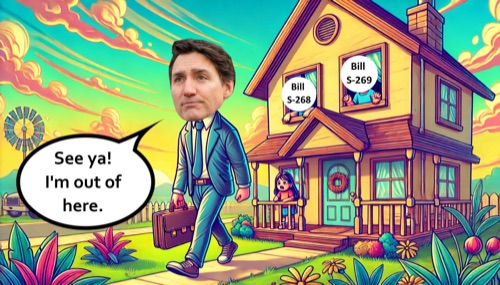
Welcome to the first edition of the GME3 for 2025! This week we’re looking at the effect that Justin Trudeau’s resignation could have on two key pieces of Canadian gambling legislation, Meta’s announcement that its third-party fact-checking program will be discontinued this year, and more legal issues on the Toronto set of Amazon Prime’s Beast Games. Read the full stories below!
For the final GME3 of 2024, we’re taking a look at a Sky News report revealing the extent to which illegal casinos target underage users through the popular game Roblox, TikTok’s final attempt to postpone the impending ban in the U.S. in 2025, and the censure of an esports athlete for violating Riot Games’ Code of Conduct by placing a bet during the League of Legends World Championship final. Read the full stories below!
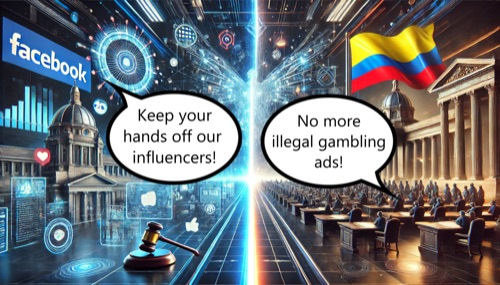
Last week, Coljuegos, the Colombian authority overseeing games of chance, betting, and iGaming, revealed a formal order sent to Meta Platforms Inc. (“Meta”), specifically addressing Mark Zuckerberg, demanding that the company block 289 social media accounts. These accounts belong to alleged illegal gambling operators, including 1XBet, and Colombian influencers who have allegedly promoted unregulated betting platforms in Colombia. You can see Coljuegos’s letter here.
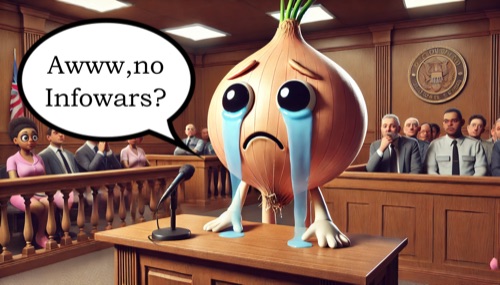
In this week’s GME3, we’re looking at what the prediction markets have to say about Luigi Mangione, the suspect in the high-profile shooting of UnitedHealthcare CEO Brian Thompson, TikTok’s challenge against the Canadian government’s decision to shut down its operations in Canada, and a federal bankruptcy judge’s rejection of the sale of Infowars to The Onion. Read the full stories below!

In this week’s edition of the GME3, we’re taking a look at a class action lawsuit targeting Apple and Google over alleged violations of the RICO Act in relation to sweepstakes casino apps hosted on their platforms, the new Ontario Bill 194 which creates new obligations for public sector entities regarding privacy, cybersecurity, and AI regulation, and five prominent Canadian news outlets that have filed a copyright infringement lawsuit against OpenAI. Read the full stories below!
Day Two Recap
For this week’s GME3, we’re taking a look at the ongoing court hearing regarding international liquidity sharing in Ontario (along with exclusive first-hand coverage from Daniel Trujillo), a shocking change to Google’s ad policies allowing targeted ads for social casino games, and the passing of a bill in Australia that would ban anyone under the age of 16 from accessing social media. Read on for the full stories!
Day One Recap
Following the groundbreaking success of Ontario’s iGaming framework launched in 2022, the province seeks to implement a new model: enable Ontario-based players to participate in online gaming platforms alongside foreign players (the “Model”). This system, known as international pooled liquidity, would allow players from different jurisdictions to compete together in peer-to-peer gaming, like online poker and fantasy sports.
As a high-risk merchant, you’re already paying a premium for payment processing. Merchant Discount Rates (“MDR”) of 5-10% (or more) on top of substantial reserve requirements are the norm, and yes, it hurts.
In this week’s GME3 we’re taking a look at the exciting announcement that iGO will now be a fully independent government organization (rather than a subsidiary of the AGCO), a potential data breach in the recent municipal election in Regina, Saskatchewan, and a surge in users for the social media platform Bluesky after the election results earlier this month. Read the full stories below!
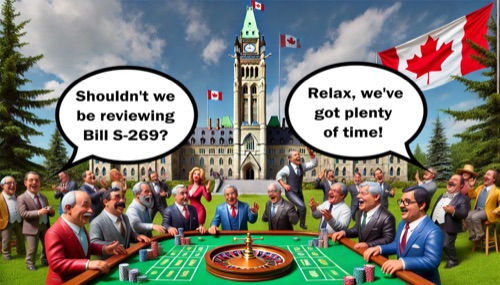
Bill S-269, officially titled the National Framework on Advertising for Sports Betting Act, was introduced in the Canadian Senate on June 20, 2023, by Senator Marty Deacon. The Bill aims to (you guessed it) establish a national framework to regulate sports betting advertising across Canada.
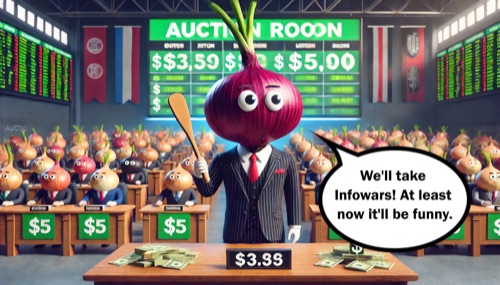
This week in the GME3 we’re looking at rumours circulating around a potential buyout of PointsBet, the departure of a significant media corporation from the social media platform X, and the acquisition of Alex Jones’ media company, including the divisive brand Infowars, by satire site The Onion. Read on for the full stories!
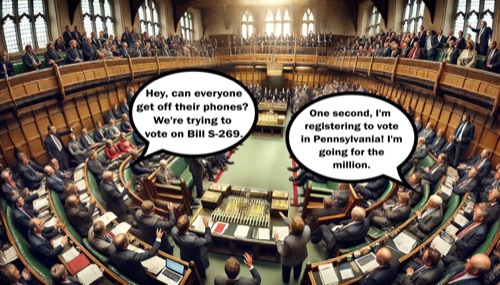
In this week’s edition of the GME3, we’re taking a look at a critical update to Entain’s position in Canada’s igaming market, a new update on the status of Bill S-269 (which aims to regulate sports betting advertisements nationwide), and news regarding Elon Musk’s $1 million-per-day voter “lottery” in Pennsylvania. Read on for the full stories!
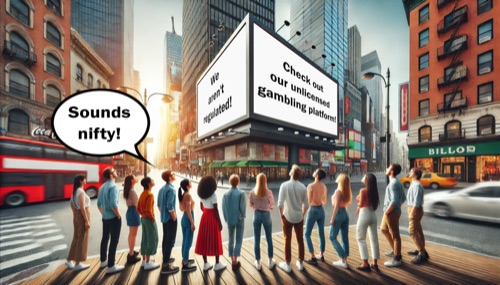
After attending the Global Gaming Expo in Las Vegas last month, there was one question that stood out regarding the North American gambling industry - “how will regulators deal with sweepstakes casinos (“Sweeps Casinos”)?” Depending on who you ask or which jurisdiction you live in, opinions vary on whether Sweeps Casinos are legitimate sweepstakes promotions or, are illegal, unlicensed lottery schemes (“Unlicensed Operators”) that are being disguised as sweepstakes businesses. A handful of states in the USA have already deemed Sweeps Casinos to be Unlicensed Operators (for example, in Washington,1 Michigan,2 and Connecticut3). So, if Sweeps Casinos are deemed to be Unlicensed Operators federally or on a state-by-state (or province-by-province) basis, how will the USA and Canada deal with Unlicensed Operators’ advertising activities?
Happy Halloween, and welcome back to the GME3! For this week, we’re looking at iGO’s market performance report for the last quarter (spoiler alert, the numbers are looking great), a shocking new valuation for former President Donald Trump’s social media venture, Truth Social, and an incomprehensible fine levied against Google by the Russian justice system.
Election betting is legal in the United States.
In this week’s edition of the GME3, we’re taking a look at the $30,000 fine levied against NorthStar Gaming by the AGCO, a new copyright suit from the publisher of the Wall Street Journal and the New York Post against the AI startup Perplexity, and X’s newest revenue stream - selling user data to third parties. Read on for more!
In this week’s GME3 we’re looking at mixed reactions to Ontario Premier Doug Ford’s plan to revitalize Niagara Falls into “Las Vegas North,” a report from the Canadian Parliamentary Committee on Access to Information, Privacy, and Ethics calling for significant updates to Canada's Privacy Act, and Australia’s plan to implement stricter laws around social media age limits. Read the full stories below!

In this week’s GME3, we have an update on the status of Alberta’s regulated iGaming market, an artist challenging a ruling from the U.S. Copyright Office over his attempt to copyright an AI-generated image, and the latest moves related to the ban of X in Brazil. Read on for more!
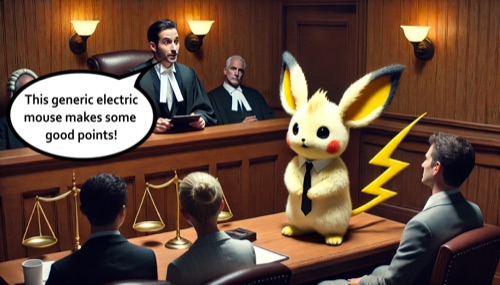
What do Pokémon, patents, video games, guns, and lawsuits all have in common? Apparently more than one would think.
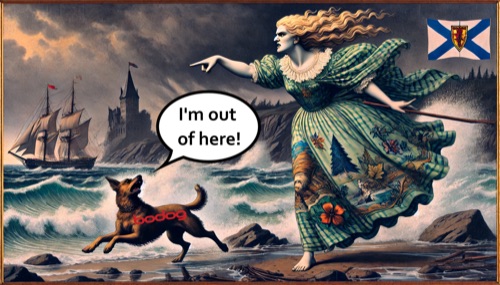
In this week’s GME3 we’re looking at the departure of Bodog from the province of Nova Scotia, a new round of expert witnesses providing feedback on the upcoming Bill S-269, and an update on the performance of X two years after being acquired by Elon Musk. Read the full stories here!
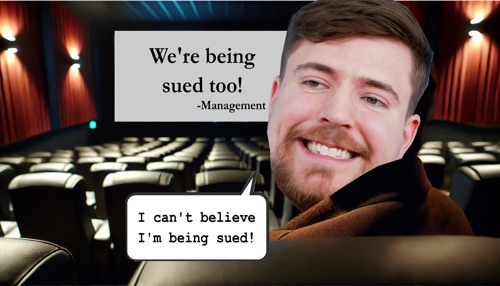
In this week’s GME3 we have an update to the court case that will decide whether international liquidity sharing will be permitted in Ontario, a record-breaking fine levied against Cineplex for deceptive marketing practices, and a lawsuit filed against MrBeast alleging “dangerous circumstances and conditions” on the set of his reality competition show “Beast Games.” Read the full article below!

In this week’s GME3 we’re looking at some potential concerns over charitable gaming in Alberta as we get closer to the expansion of the province’s online gambling framework, a new type of account on Meta that gives parents more control over their children’s social media use, and a legal battle between Miley Cyrus and Bruno Mars over alleged copyright infringement. Read the full stories here!

In this week’s GME3 we’re looking at the discourse surrounding the Edmonton Oilers’ renewed sponsorship with AGLC (as well as plugging a recent episode of Gaming News Canada), controversy surrounding a Canadian influencer and her husband who have been accused of accepting money from the Russian government, and a ruling in a Canadian case that determined Facebook broke federal privacy law. Read on for the full stories!
Welcome back to our third and final (at least for now) edition of Navigating Platform Policies, the blog series where we look at social media advertising policies and the considerations for brands who want to advertise gambling content on those platforms.
In this week’s GME3 we’re looking at the outcome of CFL defensive end Shawn Lemon’s arbitration over violations of the league’s gambling policy, the ban of X in Brazil over pervasive disinformation, and Kitchener, Ontario’s bid to host the 2025 BLAST Rocket League North America Major. Read the full stories below!
Welcome back to our second installment of Navigating Platform Policies, the blog series where we look at social media advertising policies and the considerations for brands who want to advertise gambling content on those platforms.

For this week’s GME3 we’re looking at a new update from Alberta demonstrating that responsible gaming is central to the launch of their new igaming regime, a social media botting campaign aimed to elevate the voice of Conservative leader Pierre Polievre, and a dispute between two Canadian media companies, Corus Entertainment and Rogers. Read the full stories here!
If you were browsing Twitch sometime between 2021 – 2022, there’s a good chance that you would have come across gambling content being streamed on the platform. For example, xQc, the platform’s most watched streamer during this time,1 started incorporating Stake slots streams into his schedule so often that some viewers began to question whether he had a gambling problem. In a surprise to almost nobody, xQc eventually disclosed that he had addiction issues,2 and admitted to wagering over $685 million dollars on the popular crypto casino website.3 Given the rise in popularity of streaming slots on Twitch (where viewership increased ~4x from 20194 to 20225), the widespread use of the platform by people under the age of 18, and the fact that many slots websites being streamed on Twitch were unregulated crypto casinos, Twitch updated its gambling policy in October 2022.6
In this week’s edition of the GME3 we’re taking a look at the scandal surrounding the, now defunct, Canadian crypto-trading platform ezBtc, a very exciting update for our friends at The Parleh and Gaming News Canada, and a new development in the ongoing lawsuit over copyright violations in the training of the generative AI software Stable Diffusion. Read on for the full stories!
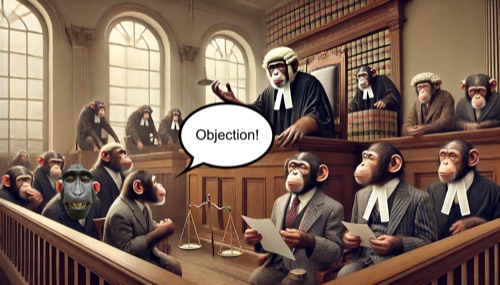
Following our article on authorship of copyrighted works by non-humans (which you can find here), today we’re diving into a curious case in which a monkey’s grin almost made copyright law go completely bananas.
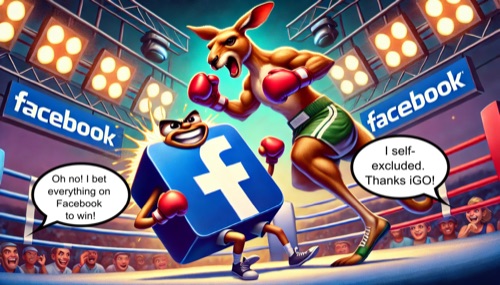
In this week’s GME3 we’re looking at iGaming Ontario’s announcement regarding its’ self-exclusion partners, a new warning from the Australian Facebook whistleblower, and a surprising move from the developer of the popular indie game Balatro. Read the full stories here!
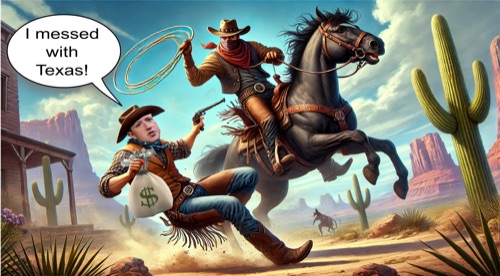
For this week’s GME3, we have an update on the upcoming launch of Alberta’s regulated igaming market, a significant settlement in a suit between Meta and the state of Texas, and two new privacy bills that have made their way through the American Senate. Read the full stories here!
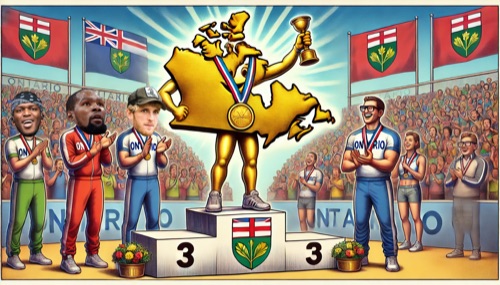
For this week’s edition of the GME3, we’re looking at iGO’s report for Q1 of the 2024-25 fiscal year, and two Olympic stories! The first is a lawsuit filed by the U.S. Olympic and Paralympic Committee against PRIME, an energy drink company founded by YouTube stars Logan Paul and KSI, over trademark infringement. The second is the International Olympic Committee’s announcement of the creation of the Olympic Esports Games! Find the full stories below.
For decades, the global consensus has been that only human creations can be protected by copyright. Yet, with the ever-growing presence of Artificial Intelligence (AI) generated content infiltrating the creative domain, the foundations of human authorship are being challenged.
In this week’s GME3 we have a long-awaited update to the rollout of Brazil’s new regulated gaming regime, a study by the Privacy Commissioner of Canada revealing distressing new data about how some platforms use deceptive design to part you from your data, and an attempt by former Toronto Raptor Jontay Porter to relocate his career to a more Mediterranean locale. Read on for the full stories!

In this week’s edition of the GME3, we’re looking at a fine levied against DraftKings in the state of New Jersey, a DOJ takedown of an illicit Russian misinformation campaign using AI, and yet another large wager placed by Toronto’s favourite rapper, this time on the Copa America semifinals. Read the full stories here!
Most of the attention on Michigan gaming last month was related to the cease and desist letter sent by the Michigan Gaming Control Board (MGCB) to Harp Media B.V. (Harp), the entity that operates Bovada.

In this week’s GME3 we’re looking at the CCSA’s call for a national strategy to address gambling-related harms due to increased online betting, the US Supreme Court's indecision on Texas and Florida laws affecting social media content moderation, and major record labels suing AI startups for using copyrighted music without permission. Read the full stories here!
In this week’s edition of the GME3 we’re looking at a gambling scandal rocking the UK political sphere, a verdict in the Supreme Court case regarding the Biden administration’s efforts to increase content moderation on social media, and a new wave of government advertising in Canada using influencers to spread the word about important information to the public. Read the full stories below!
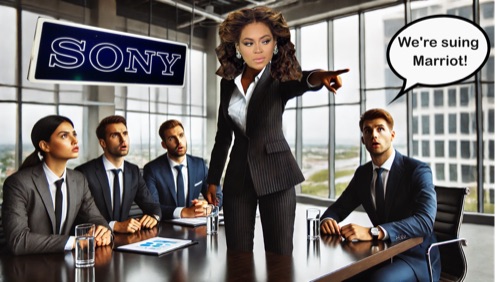
On the day of the release of the hit song “Texas Hold ‘Em” by Beyoncé, a Marriott social media employee probably thought it was a brilliant idea to have the song in the background of an Instagram post for the Ritz-Carlton Dallas location. I imagine the thought process went something like “if we use the song to promote a Texas hotel, we’ll definitely see more guests visit us because of the world’s universal love of Queen Bee”. Unfortunately for this employee, this situation may have contributed to Marriott’s broader intellectual property infringements of using Sony’s songs in their social media posts without proper permission. In fact, Sony filed a claim against Marriott last month in Delaware district court (the “Claim”) for this very reason. This blog will examine the Claim, the merits of Sony’s arguments, as well as implications for brands and influencers who may be thinking about using popular songs in their sponsored social media content.
For this week’s GME3 we have an update on Bill S-269, which aims to provide a national framework for gambling ads, a new call from the U.S. Surgeon General to put a warning label on social media apps, and the FTC’s case against TikTok being referred to the Department of Justice for alleged COPPA violations. Read the full stories below!
In this week’s edition of the GME3, we’re looking at an interesting post from Drake announcing a significant stake in the Oilers to win the Stanley Cup, an update to a B.C. privacy suit related to Canada’s political parties, and some concerns over Apple’s announcement of ChatGPT integration into their next operating system. Read on for the full stories!
In this week’s GME3 we’re taking a look at the most recent update in the Jontay Porter match-fixing scandal, new legislation out of New York that aims to protect young social media users from the addictive nature of the “content feed,” and a new provision from the CRTC that is causing a ruckus among international streaming platforms like Netflix or Disney+. Read the full stories below!
In this edition of the GME3 we’re taking a look at some exciting news out of Alberta that could lead to some big igaming developments down the road for Wild Rose Country, a laundry list of new school boards getting involved in the ongoing social media lawsuit in Ontario, and fan uproar over exorbitant cosmetic costs in the popular game League of Legends. Read the full stories below!
For this week’s edition of the GME3 we’re looking at an RCMP takedown of an illegal gambling ring in Toronto with some city officials caught in the crossfire, OpenAI’s latest scandal involving the appropriation of a certain Hollywood star’s voice, and an ongoing lawsuit between Sony Music and the Marriott chain of hotels. Read on for the full stories!
Only a handful of songs carry the same legendary status as “Stairway to Heaven”. This iconic song with (arguably) the most recognizable guitar intro riff ever played, was composed by Led Zeppelin’s Robert Plant and Jimmy Page in 1971.

In this edition of the GME3, we’re looking at an interesting new initiative from popular arcade/restaurant chain Dave & Buster’s, an impending showdown between Ontario’s Minister of Education and representatives from social media companies like X, Meta, and Tiktok, and the return of Roaring Kitty and rise of GameStop stock (the other GME). Read the full stories here!
If you’ve been following our blog, you may have come across our on-site reporting of February’s landmark hearing between the Mohawk Council of Kahnawà:ke (“MCK”), iGaming Ontario (“iGO”), and the Attorney General of Ontario regarding the legality of Ontario’s Internet gambling scheme launched in 2022 (the “iGaming Scheme”).
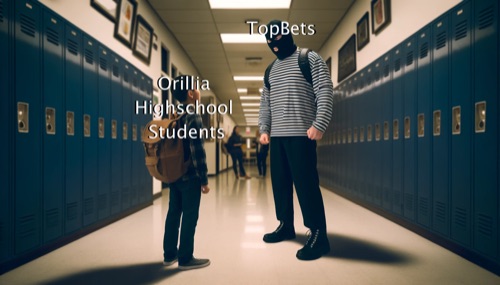
In this week’s GME3 we’re examining an illegal gambling ring targetting high school students in Ontario, a new law in Spain that would create a dedicated framework to regulate the content of social media influencers, and a new update in the TikTok ban saga. Read the full stories below!
Imagine this scenario: a brand has hired a large influencer to take part in a social media campaign to bring awareness to the brand’s new beverage. The brand has made clear that they want to highlight the drink’s health benefits, namely, that the drink will help improve consumers’ focus and attention and can even contribute to weight loss. Additionally, the brand wants the influencer’s message to be organic, so in their campaign brief that includes the instructions for the social posts, it asks for the influencer to tag the brand, but to avoid using hashtags such as #ad or #partner and to avoid the “paid promotion” disclosure tools on social media.

In this week’s GME3 we’re examining new information revealed in the Shohei Ohtani-Ippei Mizuhara gambling embezzlement scandal, an official probe into Meta being launched by the European Union, and the outcome of the TikTok ban in the U.S. Find the full stories below!

In this edition of the GME3, we’re looking at Brazil’s plan to establish a new regulated gaming framework by the end of July, some issues related to gambling ads seeping across the Ontario border, and an update to BC’s effort to introduce “online harms” legislation. Read on for more!

Warning: shameless self-promotion incoming….
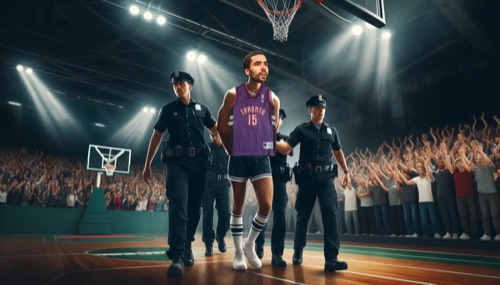
In this week’s GME3, an unfortunate new development for (now former) Raptors’ center Jontay Porter, Google expands their ban on hosting news in California, and Truth Social continues to shoot for the moon but hasn’t quite figured out how to land among the stars. Read on for the full stories!
This week’s GME3 features some updated statistics from the AGCO and iGO to mark the second anniversary of Ontario’s registered iGaming market, some new bipartisan privacy legislation on the horizon in the US, and a surprising legal challenge coming from four Ontario school boards. Read the full stories below!

For this week’s extra-litigious GME3, we’re looking at a class action suit targeting Roblox for allowing their in-game currency, known as Robux, to be used to facilitate online gambling among minors. Additionally, we’re examining another class action that challenges Google’s data collection policies, and, for our final lawsuit of the week, Donald Trump’s attempt to sue the co-founders of Truth Social for mismanagement. Read on for the full stories!
This week in the GME3 we’re looking at two high-profile betting scandals in the NBA and MLB, the official launch of Truth Social as a publicly-traded company and the impact it could have on current discourse surrounding social media in the US, and the FTC’s announcement that they will be launching an official investigation into TikTok’s privacy practices. Read on for the full stories!
The National Collegiate Athletic Association (“NCAA”) bylaws1 (the “Bylaws”) govern the conduct of inter-collegiate athletes in the US. Article 10 of the Bylaws outlines the rules and restrictions related to ethical (or unethical) conduct and explicitly restricts activities related to sports gambling.
Happy first day of spring to everyone! This week’s GME3 features a trio of social media-related stories. Italy’s Media and Communications Authority has levied a heavy fine against X for violating their laws around gambling advertisements, the Attorney General of BC has introduced a new bill aimed at allowing the provincial government to pursue social media platforms for health-related damages, and the U.S. Surgeon General has released an official statement calling for greater regulations on social media. Read the full stories below!
In this week’s GME3 we’re looking at calls for even more restrictive rules around gambling ads in Ontario after the AGCO’s new regulations came into effect, a new FTC probe aimed at Meta and their approach to consumer privacy, and new legislation in the U.S. aimed at banning the popular app TikTok. Find the whole stories below!
For this week’s GME3 we’re looking at potential news on the registered gambling front in Alberta’s annual budget, the EU bringing down the hammer on Apple for violating antitrust laws, and a second round of legislation out of Florida aiming to limit how easily children can gain unsupervised access to social media. Read on for the full stories!

Welcome to a new series of blog posts that we’re calling Essential Clauses for Campaign Contracts. The goal of these articles is to highlight some clauses that can often get overlooked by brands or talent agencies when putting together contracts. We’re kicking things off by looking at moral clauses.

In this week’s GME3 we’re looking at new betting limits on virtual slots in the UK, a new development in the OpenAI/New York Times lawsuit, and the Supreme Court’s deliberation over two new social media laws out of Florida and Texas. Find the full stories below!
George Carlin is widely regarded as one of the best and most influential stand-up comedians of all time. Unfortunately, I never got the chance to see him perform live before he passed away in 2008, but luckily for me and stand-up comedy fans, a lot of his work remains available on YouTube. My favourite joke of his that always gets me when I need a good laugh is “think of how dumb the average person is, and realize half of them are dumber than that”. Speaking of people who may not be particularly bright, two podcasters (the “Hosts”) released an AI-generated Carlin comedy special (the “AI Routine”) without the permission of Carlin’s estate (the “Plaintiffs”), and now an action has been brought against the Hosts for infringing Carlin’s copyright and right of publicity (the “Carlin Suit”).1 This blog will examine the Carlin Suit, the laws pertaining to publicity rights in the US and Canada, and implications for brands who may decide to use generative AI in their work in the future.
In this week’s edition of the GME3 we’re looking at the sudden departure of special advisor to Brazil’s Ministry of Finance José Francisco Manssur in the leadup to the launch of their regulated sports betting market, a critical privacy decision related to Meta’s “Pay or Okay” regime in Europe, and a potentially huge fine levied against Apple for anti-competitive practices. Read the full stories below!
Day two of the hearing kicked off on a sunny winter morning with a courtroom brimming with anticipation for the final session of the legal clash between iGaming Ontario (iGO), the Ministry of the Attorney General (MAG), and the Mohawk Council of Kahnawà:ke (MCK). With Justice Lisa Brownstone presiding, the mood was set for a decisive showdown.
In a quiet and expectant courtroom, the long-anticipated legal battle between the Mohawk Council of Kahnawà:ke (MCK) and iGaming Ontario (iGO), finally began to unfold. The judge delivered a reassuring greeting to all attendees and gave way to the hearing's initiation.
Welcome back to the GME3! This week we’re looking at some major developments in the Canadian registered gambling landscape, an update to the ongoing social media lawsuit in Ohio, and a unique betting opportunity that some sports fans took advantage of this past Super Bowl weekend. Read on below!
“We will give you some clues throughout the room, however, you MUST ask for a hint to be given one.”
In this edition of the GME3, we’re getting ready for the Big Game! This year’s Super Bowl is projected to be one of the largest betting events ever. We’re also looking at criticism from Canada’s privacy commissioner directed against federal agencies and a new tactic that some wellness influencers are using to grow their audiences. Read the full stories below!
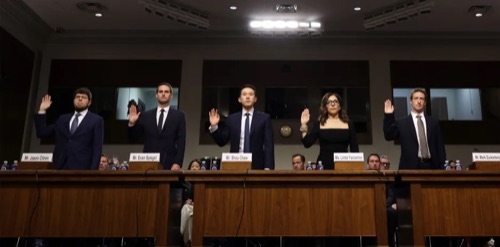
In this week’s GME3 we’re covering an attempt by the Georgia state Senate to pass a bill legalizing sports betting, accusations from the Italian privacy watchdog Garante over alleged violations of EU privacy regulations by OpenAI, and testimony from social media CEOs over the potential dangers that young users of their platforms can face. Find the full stories below!
Welcome back to the GME3! For this week’s edition, we’re covering a special AML bulletin from FINTRAC, an overview of North American privacy legislation to keep an eye on in 2024, and a mysterious disparity over who is (and isn’t) allowing AI to scrape information from their websites. Read the full stories below!
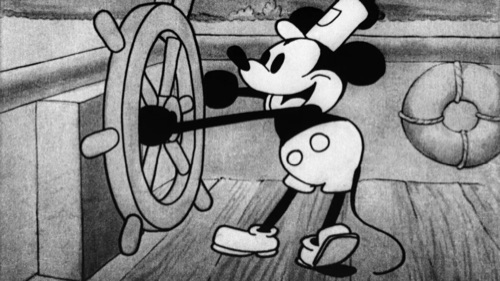
For this week’s edition of the GME3 we have a review of iGaming Ontario’s report for Q3 of 2023-24, new social media laws about to come into effect in Utah, and a critical update on Mickey Mouse entering the public domain. Read the full stories below!
As a teenager growing up in the early–mid 2000s, I witnessed some extraordinary advancements in consumer technology. In just a few years, I went from watching movies on VHS to DVD, to eventually being able to watch movies on my iPod (though actually getting movies onto my iPod was always a challenge). iTunes sold iPod-compatible movies but those usually cost anywhere from $9.99 CAD to $29.99 CAD. I remember classmates telling me that instead of paying for movies on iTunes, I could just download movies for free from peer-to-peer sharing websites like Napster or LimeWire. I was always petrified of the police knocking down my door and arresting me for breaking the law, so instead I ponied up the $20 to buy the Italian Job (which still lives on my iPhone today thanks to Apple ID). A few years later (about 10 give or take), the Canadian government decided to adopt new laws to prevent scoundrels like my schoolyard classmates from infringing copyrighted material on the internet – the Notice and Notice regime via Canada’s Copyright Modernization Act.1 This blog will take a look at the Notice and Notice regime, how the Notice and Notice regime compares to the United States’ Notice and Takedown regime via the Digital Millennium Copyright Act 2 (“DMCA”), and how internet service providers (“ISPs”) in Canada and the U.S. can comply with their local copyright infringement laws.
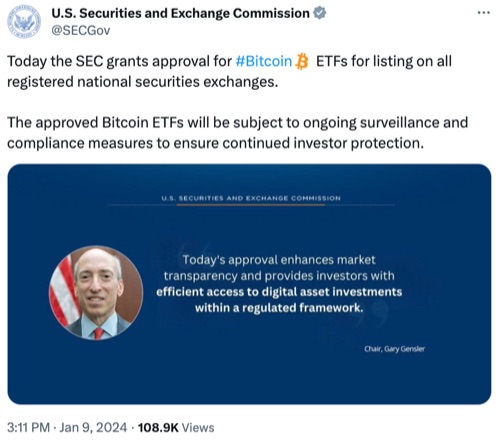
Happy New Year to all our eager GME3 readers! In this year’s first edition, we’re covering some gaming news sources that we highly recommend in 2024, confusion surrounding the SEC’s announcement of a Bitcoin ETF, and the latest round of layoffs for streaming platform Twitch. Read the full stories below!

For 2023’s final edition of the GME3, we have an EU special! First, the Italian Council of Ministers is discussing a massive increase to their gaming licensing fee, an official investigation into X has been opened under the EU’s Digital Services Act, and an Italian influencer finds herself in hot water for misleading consumers. Read the full stories below!
In this week’s GME3 we’re looking at a new mandate for expanding gambling operations in Manitoba, more feedback on Canada’s new federal privacy legislation, and the introduction of a new digital services tax on multinational corporations operating in Canada. Read the full stories below!

As video games started to become more popular and accessible, game developers began to incorporate the “freemium” model into their games – the strategy of making games free to play but charging money for additional features or in-game items. My first experience with a freemium game was in 2012 when I was procrastinating in the D.B. Weldon library as an undergraduate at Western University, trying to build a virtual Springfield in the Simpsons: Tapped Out on my iPhone 4. I knew that I needed to spend dozens of hours completing in-game tasks to build up enough in-game currency so I could buy the virtual items to build my Springfield. I realized that these items were also available for purchase with real currency as a way to skip some of the in-game tasks, but unluckily (or luckily?) for me, I was on a student budget so I didn’t have the disposable income to spend $50.00 USD to purchase the Lard Lad Donut Factory. Unfortunately, I couldn’t compete with players with deep pockets, so my dreams of having the world’s best virtual Springfield died a quick, painless death as I moved on to Flappy Bird, with my (real) wallet no worse for wear.
In this week’s edition of the GME3 we’re covering an update to the QOGC’s calls for a registered igaming regime in Québec, a new lawsuit launched in Spain against Meta, and a controversial decision from popular streaming platform Twitch. Read on for the full stories!
This week’s GME3 features a significant fine levelled against Entain in the UK, a resolution to Canada’s conflict with Google over news publications, and an update on the Meta lawsuits currently ongoing in the US. Read on for more!
This week’s edition of the GME3 covers ESPN Bet’s entrance to the sports betting world, yet another lawsuit filed on behalf of X, and Canadian media’s opinions on the impending Online Streaming Act. Read the full stories below!
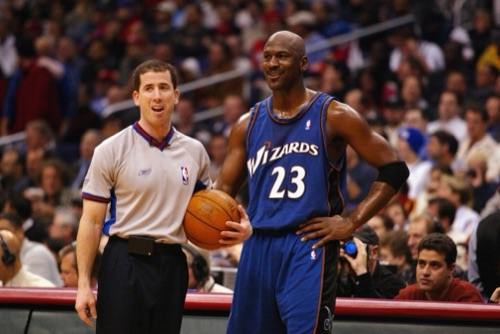
It’s been about one month since the NHL suspended its first player for violation of the league’s gambling rules. Shane Pinto of the Ottawa Senators was suspended for 41 games for “activities related to sports wagering”.1 At the time of the announcement, the NHL disclosed that Pinto did not bet on NHL games, however, few details of Pinto’s specific gambling activities have been released since that time. Some journalists have claimed that Pinto had a connection with a third-party proxy bettor, an issue with his account was initially flagged by one of the NHL’s betting partners, and the league’s investigation began over the summer,2 but this is about as many details that have been publicly released about the suspension. The public will likely remain in the dark surrounding the exact circumstances of the investigation and suspension since the suspension was the result of a negotiated settlement between Pinto and the NHL (which supposedly included a confidentiality clause).3
This week in the GME3, the AGCO has begun the process of introducing new advertising standards related to celebrity and athlete endorsements, an update on the slew of social media lawsuits in the US, and the Federal government has released the final policy directive for the Online Streaming Act. Read the full stories below!
This week in the GME3 we’re featuring an update (or lack thereof) on Alberta’s move towards regulated gaming, more concerns rising from privacy Bill C-27, and the impact of the rise of a new kind of influencer. Read on for the full stories!
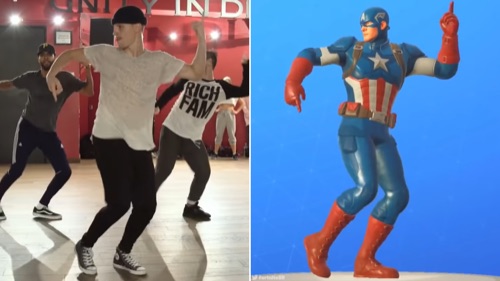
It seems like last week's blog post, the Fresh Prince of Copyright Claims, may have made its way all the way up to the United States Ninth Circuit Court of Appeals. Around 24 hours after publishing our blog, the Court overturned a dismissed lawsuit from choreographer Kyle Hanagami which alleged that Epic Games used some of his copyrighted choreography in a Fortnite emote. In February 2021, Hanagami registered a copyright with the US Copyright Office for a five-minute dance routine (the “Work”) which he originally published on YouTube in November 2017. However, in the interim in August 2020, Epic released an emote called “It’s Complicated” which Hanagami alleged copied 4 counts of movements (the “Steps”) from the Work.
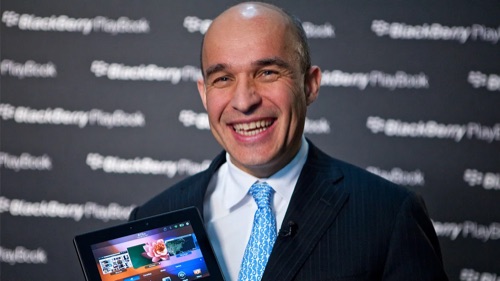
This week’s edition of the GME3 features a massive update to Quebec’s rules regarding promotional contests, yet another social media case being elevated to the US Supreme Court, and scathing criticism of impending Bill C-27 from former BlackBerry CEO Jim Balsillie. Find the full stories below!
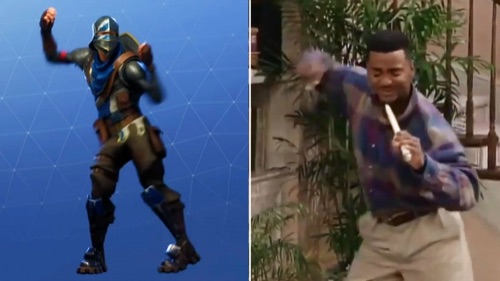
In July 2017, Epic Games (“Epic”) released Fortnite and arguably revolutionized the video game industry. Fortnite’s release coincided with the height of the esports boom (the bubble has arguably burst – but that is a conversation for another time), as venture capital started pouring into the esports industry and social media networks like TikTok and Twitch started to gain mainstream popularity. Some of the biggest draws of Fortnite are its cartoon figures and the ability of characters to perform “emotes” – special dances or movements that are either free or available for purchase via the game’s item shop. One of the more popular emotes that was almost immediately available for purchase after Fortnite’s release was the “Fresh” emote, which was essentially a copy of Alfonso Ribeiro’s “Carlton” dance (the “Carlton”) from his time playing Carlton on the popular 90’s sitcom Fresh Prince of Bel Air.

This week in the GME3 we have a report on “at risk” gamblers in Prince Edward Island, a massive lawsuit against Meta launched by several US states, and the potential for Bitcoin to be brought to the stock market. Read the full stories below!
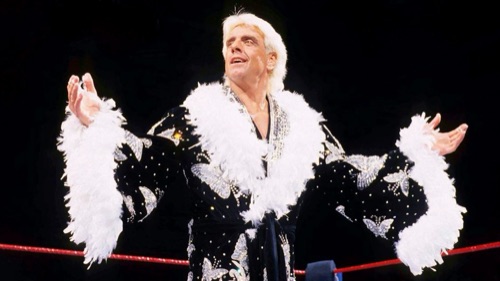
“Be the change you wish to see in the world” is a phrase that has inspired me and countless others. It is typically attributed to Mahatma Gandhi, but we are vigorous fact-checkers at GME Law and won’t be making that mistake. What Gandhi actually said was “if we could change ourselves, the tendencies in the world would also change. As a [person] changes [their] own nature, so does the attitude of the world change toward [them]…We need not wait to see what others do.” Totally inspiring! Not only to me but also to NorthStar Gaming Holdings Inc. (operator of NorthStarBets.com) who announced plans to launch its online casino and sportsbook across Canada. Tired of waiting for province-by-province regulation? No problem – just launch in the rest of Canada. Eventually, the Canadian iGaming regulation space will change.
This week in the GME3, OLG released its annual report with more good news for Ontario gaming, a Cisco privacy survey reveals shifting attitudes and priorities around the issue of privacy, and X introduces a new strategy to combat the spread of bots on the platform. Read the full stories below!
This week’s GME3 covers the latest quarterly numbers from iGO, a verdict determined that Google must abide by Canada’s privacy laws, and the newest lawsuit launched against TikTok. Read on for more information!

This week in the GME3 we have a surprising update to New York’s Daily Fantasy Sports regulations, a shocking study that shows how data collected from children is used, and a new effort from the CRTC to regulate platforms that host user-generated content on the internet. Read the full stories below!
With summer officially over and winter quickly approaching, fans of the National Hockey League (“NHL”) are once again getting ready to watch their favourite teams embark on the journey to win the Stanley Cup. Self-aware fans who have already lost hope due to their teams’ repeated history of high expectations and eventual failure are preparing for yet another season of disappointment and dejection. I, unfortunately, am one of these fans. Sometimes I wonder if it is better to cheer for a team with no expectations, no desire to break a 57-year Stanley Cup drought, and no 24/7 media coverage – perhaps a team like the Columbus Blue Jackets is a better fit for me.

This week in the GME3 we have a new legal challenge related to igaming in the sunshine state, groundbreaking social media laws in the European Union, and an update to the ongoing SAG-AFTRA strike. Find the full stories below!
In this week’s GME3 we have an update on the calls for Québec to create their own regulatory framework for online gambling, a hefty fine against TikTok from Ireland’s Data Protection Commission, and a unique approach to funding from esports team Sentinels. Find the full stories below!
The year was 1967. The first national anti-Vietnam war protest was held in Washington, D.C., the Toronto Maple Leafs won their last Stanley Cup by defeating the Montreal Canadiens in 6 games, and two Canadian taxi drivers with entrepreneurial tendencies were about to start a business that would lead to the legalization of off track betting in Ontario, and two changes to the gaming and betting provisions of the Criminal Code (Code).

In this week’s GME3 we have some reactions to the AGCO’s new regulations around gambling advertising, updates on the many X lawsuits, and an overview of the Unity scandal dominating the video gaming industry. Read on for more!

Imagine this scenario: you’re watching TV and you see a commercial that says with just a little bit of effort, you can get your own personal jet and collect over 20 million dollars in the process. Even though it may be far-fetched, you can’t help but picture yourself piloting your new jet to work and avoiding the chaos of public transportation, all while having a golden jacuzzi and a personal chef waiting for you once you get home. In the mid 90’s, this was the dream that Pepsi Co (“Pepsi”) sold to millions of consumers in the United States through its “Pepsi Stuff” television commercial (minus the jacuzzi and personal chef), and one ambitious 20-year-old (the “Plaintiff”) tried to take Pepsi up on its “offer”. However, instead of a jet, the Plaintiff’s efforts resulted in a court battle, a Netflix documentary (“Pepsi, Where’s My Jet?” or the “Documentary”), and a revelation that Canada’s advertising laws may be a force to be reckoned with. This blog will look at the Plaintiff’s case, Canada’s advertising laws, and important lessons for brands and agencies when selling something that may be “too good to be true”.

In this week’s GME3 we’re covering the $41 billion Stake hack, more friction between Kim Kardashian and the FTC, and a new development in the world of copyright law and AI. Read on below for the full stories!
We have some interesting stories for you in this week’s GME3. First, an update on some sports betting advertising legislation in the US, Justin Trudeau’s statement on Meta’s banning of Canadian news content, and finally, a brand influencer trend that turns social media marketing on its head. Find the full stories below!
In this week’s GME3 we’re covering the AGCO’s latest enforcement of the Registrar’s Standards, the sunsetting of one of X/Twitter’s oldest advertising features, and the expansion of Twitch’s community guidelines around gambling content. Read on for the full stories!

If you were a teenager growing up in the 90s or early 2000s, child stars like Macaulay Culkin, Mary Kate and Ashley Olsen, and Hillary Duff were household names and larger-than-life personalities. While these child stars gained popularity through movies and television appearances, children these days can grow a following simply by starting a social media channel (with their parent's consent) and talking about what they love. Take for example Ryan Kaji, a Youtuber who started reviewing toys on his channel at the age of 4 and last year was listed by Forbes as having a net worth of $27 million.1 Even though the scope of Kaji’s success is rare, it begs a question – what protections are in place to safeguard the money children make through social media fame? Last week Illinois became the first jurisdiction to pass a law (the “Illinois Law”) aimed at protecting the wealth of children under the age of 16 who appear in certain monetized social media content (“Kidfluencers”). This blog will examine the Illinois Law, some other child entertainer laws that are relevant in the Canadian context, as well as how brands and companies can protect themselves if they use Kidfluencers in their content.
In this week’s edition of the GME3 we have a new challenger that’s looking to take the sports betting market by storm, as well as trouble with Meta in both Canada and the US. Read on for the full stories!
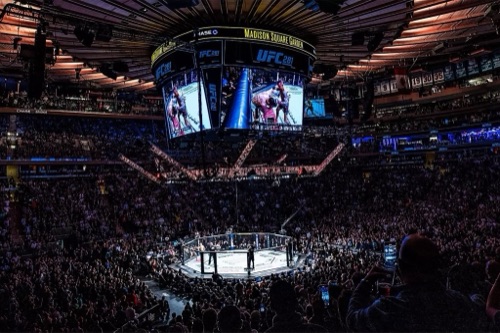
On December 6, 2022 we wrote about the decision of the Alcohol and Gaming Commission (AGCO) to establish a blanket prohibition on UFC betting. We set out four takeaways and our general view was that the decision to prohibit UFC demonstrated the AGCO's commitment to player protection and integrity. We also noted that the prohibition would likely be temporary and, that as long as the ban was in place, the Ontario unregistered market would get a boost.
In this week’s edition of the GME3, we’re covering yet another NFL player who has been suspended over the league’s gambling policy, an update to Meta’s approach to targeted advertising in the EU, and what we can learn from the X branding update to Twitter. Read on for more!
This week in the GME3, we look at iGaming Ontario’s Market Performance Report (the results are looking good for Canadian regulated gaming), a barrage of new privacy laws are coming into effect in the US, and influencers are taking advantage of the new opportunities provided by Meta’s Threads. Read on to learn more!
This week’s GME3 includes lessons that we can learn from the heavy fine levied against gaming operator Betfred in the UK, an impending ban on behavioral advertising on social media platforms in Norway, and a critical update from striking union SAG-AFTRA that all influencers should be aware of. Read on for more!
The last time the Federal Trade Commission (the “FTC”) updated the FTC’s Guides Concerning the Use of Endorsements and Testimonials in Advertising (the “Guide”), many of the social media platforms that are widely used today like Instagram, TikTok, and Snapchat didn’t exist, and influencer marketing only existed via traditional media or to the extent paparazzi were able to snap a picture of a celebrity wearing a particular brand (think Paris Hilton x Von Dutch). But the FTC has updated the Guide for the first time since 2009 due to the widespread use of social media platforms and the ascent of the influencer marketing industry. Some of the most notable updates to the Guide include the ability for “intermediaries'' such as advertising or PR agencies to be liable for deceptive marketing practices and new restrictions on paying for positive reviews and fake followers. If your agency or company works with influencers, read on to learn how you can stay on the right side of the updated Guide!
This week’s edition of the GME3 covers how the CFL’s announcement of their first authorized gaming operator partner could lead to changes in Canada’s sports betting ecosystem, the potential privacy ramifications of Meta’s new Twitter competitor Threads, and an update on the Microsoft-Activision merger, which has the potential to shake up the video game industry.
Attention Ontario registered gambling operators, Twitch streamers, and influencers! This week’s GME3 looks at how the Netherlands’ ban on gambling advertisements could forecast the future of Canadian gambling advertising in light of the upcoming Bill S-269, how Twitch’s prohibition of unregulated gaming providers from their platform makes obtaining registration even more important, and finally provides an overview of new FTC regulations regarding influencer marketing that is relevant to all business owners.
This week’s edition of the GME3 includes two gaming bills pending in the Canadian Senate that could have a major impact on Ontario registered iGaming Operators and the Canadian gaming framework as a whole, the fallout of Bill C-18, which requires companies like Meta and Google to pay Canadian media outlets for content that they share on their platforms, and an update on the Microsoft-Activision merger. Read on for more!
Artificial Intelligence (“AI”) is this year’s new buzzword. Any substantial scrolling on social media reveals threads by entrepreneur influencers on how to use ChatGPT to save time and make money. However, not all users are engaging with AI appropriately. Whether it is a lawyer relying on fake cases generated by ChatGPT, students using ChatGPT to write essays, or a music producer using celebrity voices without the artists’ consent, there are clearly risks as AI capabilities advance. In response to concerns about AI being used for harmful (and illegal) purposes such as fraud, intellectual property infringement, and invading privacy, governments across the world, including Canada, have begun the process of implementing laws to limit the risks associated with AI. This article will examine Canada’s approach to AI, provide selected highlights of Bill C-27, a law proposed to regulate AI in Canada’s private sector, and outline how businesses should approach using AI in preparation for Canada’s potential AI legislation.

Welcome to the first edition of the GME3: each week we review industry news and find one gambling story, one media story, and one entertainment story that we think is worth sharing.

When Epic Games (“Epic”) was fined $520 million dollars by the Federal Trade Commission (“FTC”) back in December 2022, $245 million dollars of that fine was due to Epic’s illegal “dark patterns” related to their billing practices. According to the FTC, the “dark patterns” involved intentionally making the purchase feature within Fortnite ambiguous, failing to obtain express consent from parents prior to children making purchases, and, in some cases, restricting a child’s account access when parents complained about unwanted charges appearing on credit card statements. This article will examine the lawsuit, the laws pertaining to dark patterns, and how game developers and service providers can avoid attracting similar liability from competition bodies like the FTC or the Canadian Competition Bureau.
Eleven days after a judge certified a class action against Epic Games (“Epic”) in Québec, Epic was ordered to pay $520 million in fines to the US Federal Trade Commission (“FTC”). Of those, $275 million were for violating US consumer protection laws, including the Children’s Online Privacy Protection Rule (“COPPA”)1and the Federal Trade Commission Act (the “Act”)2. The judge ordered Epic to pay $245 million for “dark patterns and billing practices”3. This chapter of our Fortnite Lawsuit Royale series will examine Epic’s COPPA and Act violations. We will look into the implications for game developers and businesses that market their products or services to children under 13 (“Children”).

Another week, another celebrity sued for promoting crypto companies. In this case, celebrities like Jimmy Fallon, Justin Beiber, and Madonna are alleged to have been involved in a class action over promoting Bores Ape Yacht Club ("BAYC") NFTs. As you might know, we recently examined Canada’s misleading advertising laws in our FTX article. This case revolves around celebrities' social media disclosures (or lack thereof) about their relationship with BAYC. We will examine both Canadian Competition Bureau's (the "Bureau") and US Federal Trade Commission's ("FTC") laws regarding influencers and social media disclosures.
On December 1st, 2022, the Alcohol and Gaming Commission (AGCO) released a press statement requiring registered iGaming operators to cease offering and accepting UFC bets due to concerns over betting integrity.

There has been no shortage of drama over the past few months with the fallout of FTX–the now-defamed cryptocurrency exchange. After its peak in July 2021 and having the third largest cryptocurrency exchange, they declared bankruptcy in November 2022, causing many investors and users to lose millions of dollars and search for who to blame.
Bill 64, An Act to modernize legislative provisions as regards the protection of personal information, came into force on September 22nd, 2022, and sets out new requirements for private sector organizations that operate in Québec or have Québec consumers. This is particularly important for online gaming companies which operate solely in Québec or across Canada. This article will outline a summary of notable changes in force as of September 2022 and the implications for companies that may be affected.
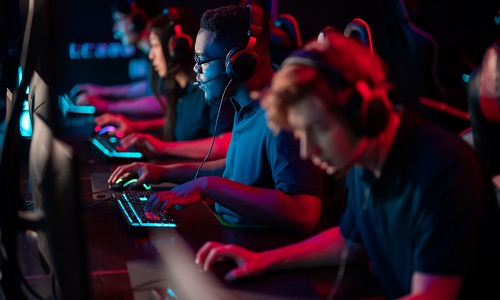
On October 4th, 2022, the Alcohol and Gaming Commission of Ontario (AGCO) announced that its Registrar’s Standards would be updated to end the transition period for unregulated operators and suppliers. This article will break down what these changes mean, and it will help you understand how your business may be affected.
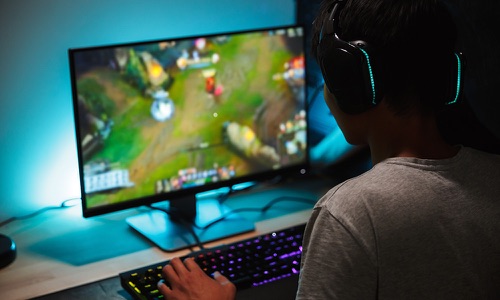
“Bet on Yourself” is a phrase used by both Toronto Raptors Guard Fred Van Vleet and Players’ Lounge (an online tournament platform that allows casual video gamers to “pay for play” or “PFP,” for ease of reference). This means that players can pay to enter online matches or tournaments, and the winner of said matches or tournaments can win cash prizes.

Major DFS sites announced last week that they will no longer offer DFS to players in Ontario “due to a change in government regulations”. For obvious reasons, DFS players in Ontario are upset.
In early December, a Québec judge certified a class action (the “Complaint”) against Epic Games (“Epic”) – the developers of the popular video game Fortnite – on behalf of Québec users who had become addicted to Fortnite since September 1, 2017 (the “Class”). This article examines the Complaint and the relevant Québec consumer protection laws Epic allegedly violated.
No insights match your search.
Subscribe to GMEmail, our monthly newsletter featuring gambling, media, and entertainment content.