
After its launch in 2023, Counter-Strike 2 (“CS2”) – the sequel to Counter-Strike: Global Offensive (“CS:GO”) – quickly became the most popular game on the hosting platform Steam, holding the all-time concurrent player record of 1,862,531 as of the writing of this article. CS2’s success has led to it being one of the most-streamed games on Twitch, as well as hosting massive global tournaments that bring in millions of viewers.
A key driver of revenue for the game’s publisher, Valve (which also owns Steam), is cosmetic sales. Players can buy cases which randomly unlock alternate appearances (or “skins”) for characters and weapons. In March 2025, players opened over 32 million cases in CS2. And, with a cost of USD $2.49 to open each case, Valve made at least USD $80 million in March on case sales alone – before taking into account the cut that Valve gets from players re-selling skins or cases on the Steam marketplace.
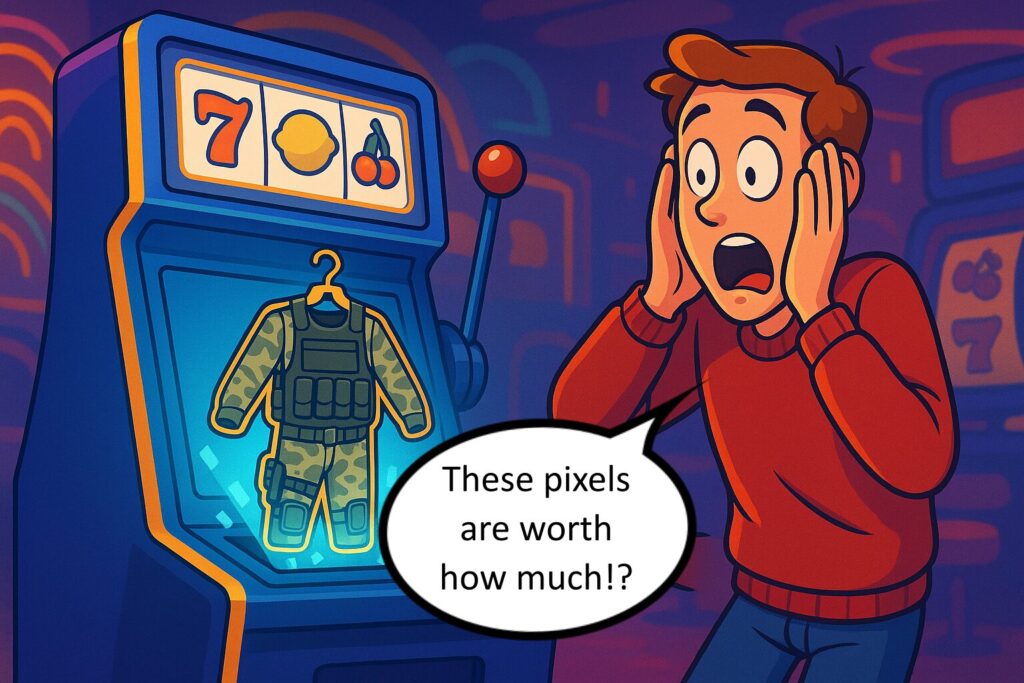
The Steam marketplace is key to understanding the topic of today’s article. Players can easily resell these digital cosmetics for real money, with some rare skins boasting outrageous price tags, like USD ~$2 million for the Karambit Blue Gem 387. With these digital assets being worth so much to collectors, it wasn’t long before third-party platforms began popping up to facilitate trading, buying and selling, and – crucially for our purposes – gambling of these skins.
These “skins gambling” platforms let you deposit CS2 items and wager them on a variety of luck-based games or bet on esports outcomes. Because the skins can be cashed out via trading and resale, the wagers have real monetary value even when no dollars visibly change hands. These platforms quickly became popular with content creators on Twitch and YouTube, with creators showcasing openings, jackpots, and “lucky streaks,” then dropping referral links or promo codes that send their (often underage) viewers straight to the casino site. For years, that creator layer has been the industry’s primary growth engine as well as the main flashpoint for policy and regulatory scrutiny.
A Trip Down Memory Lane
Skins gambling platforms have been an issue for almost a decade now. In October 2016, the Washington State Gambling Commission ordered Valve to stop the use of CS:GO skins for gambling, arguing that skins as wagering currency created an illegal, unregulated market. Valve pushed back publicly, saying it didn’t operate or partner with gambling sites, but the episode marked the moment “skins as money” hit the regulatory radar. It also revealed how much of the market ran on automated bot transfers and third-party inventory access. Periodic takedowns of these sites followed, but the activity never fully disappeared.
Around the same time, prominent CS:GO content creators Trevor “TmarTn” Martin, Thomas “ProSyndicate” Cassell, and Josh “JoshOG” Beaver got into trouble for promoting the CS:GO skin-betting site CSGO Lotto without clearly disclosing their own ownership stakes. This raised concerns from the FTC regarding endorsement and integrity concerns in a lightly regulated skins gambling ecosystem. Further exposes from fellow YouTubers prompted backpedalling, partial apologies, and video deletions by the creators, while observers warned that insider access could enable rigged outcomes. Further, as the UK Gambling Commission discovered in 2017, this activity largely appealed to minors, with 45% of 11-16 year-olds being aware of skins gambling, and 11% (or ~370,000 children) actively participating.
In the years since, UK authorities have repeatedly emphasized that where virtual items can be converted to “money or money’s worth,” using them for games of chance is gambling that requires a license. The UK government’s recent rapid review of skins gambling traces the growth of these sites and flags youth-risk, fraud, and AML concerns that mirror long-standing regulator warnings.
In September 2022, Twitch announced a general ban on the streaming of unlicensed gambling sites – explicitly naming Stake, Rollbit, Duelbits, and Roobet – and said it would expand that list as needed. That didn’t kill gambling content outright, but the message was clear: less tolerance for promoting unregulated wagering, especially where minors might watch.
New Developments
At the end of October, YouTube announced plans to strengthen enforcement of its Community Guidelines on two fronts: first, online gambling (with new specificity around digital goods) and second, “graphic gaming content” when it involves realistic human characters and depictions like torture or mass violence against non-combatants.
For CS2, the headline is the gambling piece. YouTube’s update explicitly calls out gambling with digital goods that have real-world monetary value – such as skins, cosmetics, and NFTs – particularly where content promotes or links to non-approved gambling platforms. Once these new rules go into effect on November 17th, content that directs viewers to these sites will be prohibited.
This means that if a video demonstrates or normalizes skin wagering and includes referral/affiliate codes or direct links to unapproved gambling sites, it will be removed. YouTube’s new enforcement standards aim to combat the reality that many creators were funnelling viewers to skin casinos via descriptions, pinned comments, link hubs, and overlays.
The Big Picture
CS2 skins gambling probably isn’t going away, but the distribution funnel that supercharged it is certainly about to narrow. Once YouTube’s new rules kick in on November 17, creators who have built revenue around referral links, promo codes, and link hubs to unlicensed skin casinos will face removals and strikes, and sponsors will have to reassess deals that suddenly carry higher platform and brand-safety risk. For Valve, pressure will likely grow to further restrict automated transfers and Steam marketplace behaviours that enable cash-out arbitrage, while regulators will likely keep leaning on the “money or money’s worth” principle to frame skin wagering as licensable gambling.