
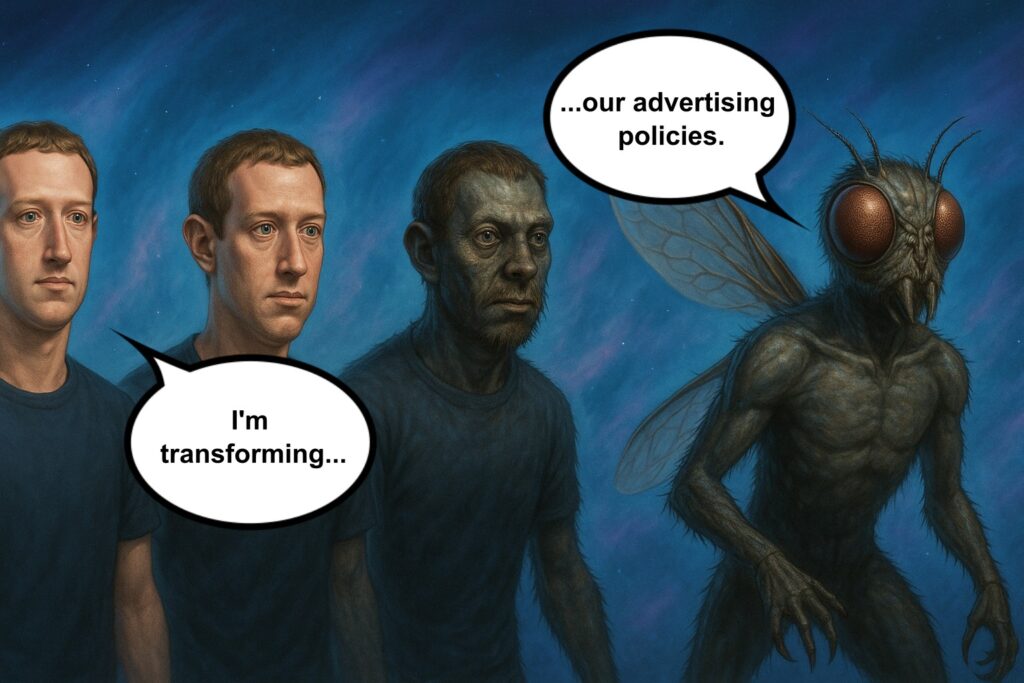
Earlier this month, Meta unveiled a sweeping rewrite of its “Online Gambling & Gaming” advertising standard, quietly posting an update that forces every gambling advertiser – from operators and affiliates to one‑off influencers – to pass through a new verification portal before a single Facebook or Instagram ad can run.
The shift lands just as the Alcohol and Gaming Commission of Ontario (AGCO) is publicly pressuring media outlets to stop carrying promotions for offshore sites, like the often-persecuted Bodog, arguing that every grey‑market banner undermines the legitimacy of the province’s two‑year‑old regulated market. This article explains the changes to Meta’s advertising rules, how these changes could impact licensed and offshore businesses that operate in Ontario, and provides practical advice that you can use to adapt your business to the new regulations.
New Rule: No Unlicensed Ads
Meta’s refreshed policy does far more than tighten a few age‑gating screws. As of the enactment, advertisers for online gambling or gaming companies (which Meta has defined as “any product or service where anything of monetary value is included as part of a method of entry and prize”) must upload proof of gambling licences for every jurisdiction they intend to target. They must also declare whether they are an operator, an affiliate network, or an aggregator. Staff reviewers then manually approve only the specific Business Manager and ad accounts named in the submission; any accounts not listed must initiate the process from step one.
The rules also apply to influencer content: if, for example, a creator wants to post an Instagram reel for a sportsbook, they must register as an affiliate, provide a signed brand contract, and wait for Meta’s approval. This policy also includes any landing page that merely references real‑money play, sweeping platforms like tip sites and bonus‑code blogs into the net.
Why Now?
Why is Meta taking these steps now? One clue lies in a trail of provincial warnings about fake casino apps and phishing scams circulating on Meta’s platforms. Since early 2024, Canadian Crown corporations from Manitoba to Nova Scotia have repeatedly urged players to ignore Facebook or Instagram posts masquerading as official casino offers – warnings that continued despite thousands of user reports. This trend has only gotten worse as AI technology has improved over the last few years, as the prevalence of deepfaked influencers promoting fake gaming platforms has increased dramatically.
By demanding licence uploads and hard‑wiring account‑level approvals, Meta is signalling that it can no longer afford the reputational hit of hosting unlawful gambling promos that local agencies have already flagged as consumer‑protection hazards.
Ontario’s Advertising Lines in the Sand
Since Ontario’s regulated iGaming market opened in April 2022, the AGCO has banned public bonuses, required clear age‑gating and – crucially – made operators legally responsible for the behaviour of every marketing partner that they hire. Those rules have teeth: in March 2025, BetMGM Canada was hit with a CAD $110,000 penalty after a third‑party advertising partner offered cash to entice new sign‑ups at two public events, a direct breach of Standards 1.19 and 2.05.
The AGCO’s hard‑line stance escalated in May 2025, when the regulator sent an open letter to more than a dozen broadcasters, streaming services and social networks urging them to “stop promoting unregulated online gambling and sports‑betting sites like Bodog.” The letter accused outlets of lending “a veneer of legitimacy” to high‑risk operators and warned that continued cooperation could invite closer scrutiny (or at least more public shaming).
Interactions With Ontario Law
Meta’s new requirement that advertisers upload an Ontario registration number dovetails neatly with the AGCO’s demand that only legal brands reach provincial audiences. An offshore sportsbook cannot supply that documentation, so, at least in theory, any advertising campaigns from platforms without an Ontario registration would stall at Meta’s verification process.
For regulated brands, the overlap could prove to be more of a blessing than a burden. Compliance paperwork effectively becomes a competitive moat: campaigns tied to accounts that have successfully been verified should see faster approvals and less friction as grey‑market rivals lose their digital oxygen.
Practical Fallout for Key Players
Canada’s repealing of the DST also defuses a budding trade conflict. Washington had threatened a “Section 899” retaliation clause in pending tax legislation that would have raised withholding taxes on income flowing to countries imposing “unfair” digital levies. With the DST gone, U.S. negotiators have dropped Section 899 from the draft, and formal Canada‑U.S. trade talks are back on the calendar for late July.
That being said, the global environment remains fluid. Ottawa has recommitted to the OECD’s Pillar One negotiations, which could yet reallocate a slice of residual profits from large multinationals – including global gaming groups – to market jurisdictions in future years.
Furthermore, on June 3, 2025, the Italian Tax Authority issued Tax Law Principle No. 6/2025, clarifying that its own 3% DST applies to the net margin retained by online gaming platforms, after excluding bonuses but before other operating costs. Italy’s move illustrates that even as one door closes in Canada, other jurisdictions are sharpening their rules, and operators with cross‑border businesses should stay vigilant.
Recommendations for Your Business
As a result of these changes, licensed operators will face an immediate administrative sprint. Every Ontario licence holder – even those cleared by Meta under the old system – must resubmit through the Permissions portal, attach up‑to‑date licensing documentation, and map every account they expect to use. Once that hurdle is cleared, the payoff could be cheaper clicks and cleaner brand safety as the field of competitors thins.
On the other hand, affiliates and influencer marketers have now entered a harsher reality. The mindset of “post first, ask forgiveness later” is gone; anyone paid to drive traffic must now register as an affiliate inside Meta’s Business Suite, link a signed contract, and await Meta’s approval before hitting “publish.” For many micro‑influencers, that gate will feel as high as a full operator licence, pushing them either into official partnership programmes or out of the gambling vertical altogether.
Media agencies and programmatic traders must audit every gambling client on their rosters, pausing campaigns that lack Meta authorization, and scrubbing offshore brands from their marketing schedules. Those who get ahead of the compliance curve can pitch themselves as the safest pair of hands in a newly policed environment – an attractive proposition as Ontario’s regulated customer base grows.
A Market Still in the Grey
The crackdown arrives in a market that is already more than four‑fifths legal. An Ipsos study commissioned by iGaming Ontario and the AGCO found that 83.7 percent of Ontarians who gambled online in the three months to April 2025 did so on a regulated site, up from just 30 percent when the market first launched. Ipsos further elaborated that of that 83.7 percent, 19.9 percent use a combination of regulated and unregulated platforms. If I’m doing my math right (and that’s a big “IF” coming from me), that still leaves roughly one player in three using offshore options, a pool that’s definitely substantial enough to sustain persistent advertising demand if platforms permit it. Meta’s new gate, combined with the AGCO’s louder megaphone, appears designed to squeeze that remaining slice even further.
Unanswered Questions
Two questions hover as these new rules get implemented over the next few quarters:
First, how aggressively will Meta sweep out legacy campaigns that were approved under the old rules? A slow sunset could give grey‑market brands weeks of residual reach.
Second, will other platforms, like TikTok or X, follow Meta’s lead before regulators single them out? If not, it will still permit unlicensed platforms to reach players in Ontario.
Key Takeaway: Compliance Becomes a Competitive Edge
In isolation, Meta’s portal might look like another tedious form‑fill; in concert with Ontario’s advertising regime, it becomes a strategic filter. Legal brands that invest in documentation, audience filters, and transparent affiliate structures are likely to find a less crowded and more trustworthy advertising space. Offshore operators, by contrast, face a choice between the expense of full provincial licensing and the risk of watching a key mainstream marketing channel evaporate.
For agencies tempted to slip a grey‑market logo into a media plan “just until the client gets licensed,” the cost‑benefit equation has flipped. The regulator can see the same feeds your prospective customers do – and now Meta’s reviewers can, too. The best way to stay visible in Ontario is suddenly the simplest: play by the rules, show your paperwork, and the gatekeepers will reward you with reach.