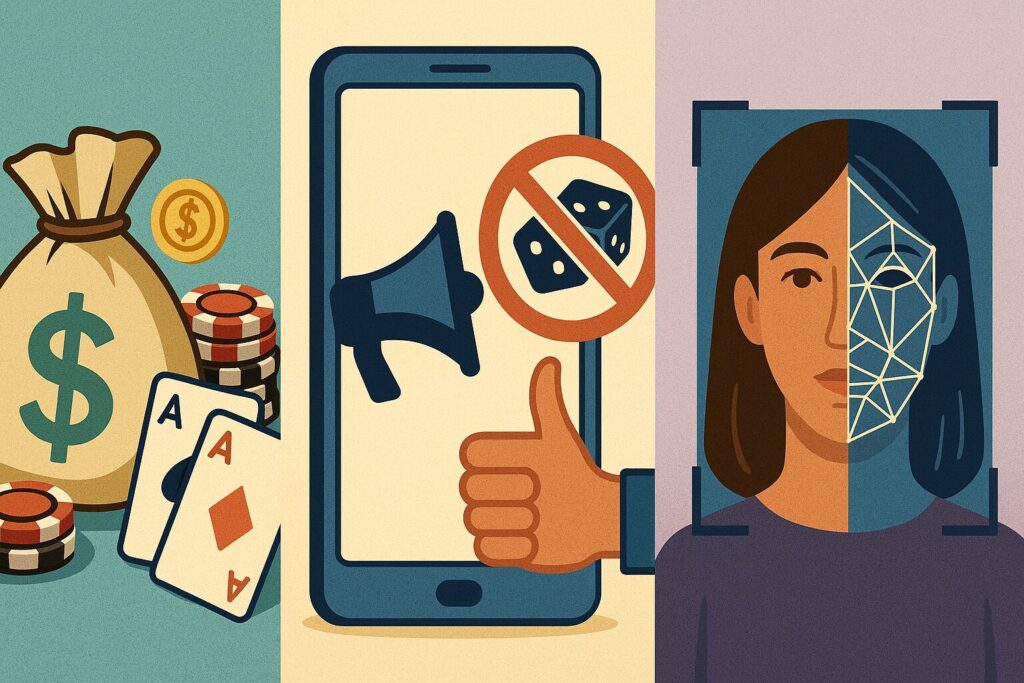
This week’s GME3 covers a trio of high-stakes developments across the gambling, media, and entertainment spheres. In the iGaming world, PointsBet’s Canadian division finds itself at the centre of a growing tug-of-war, as would-be buyers circle. Over in Silicon Valley, Meta quietly updates its gambling ad policies, raising new questions for affiliates and licensees alike. And in Denmark, lawmakers take aim at deepfakes with a bold proposal to enshrine your right to your own face. Read the full stories below!
Gambling
Betr Watch Out
Japanese tech firm MIXI has received regulatory approval from both the Alcohol and Gaming Commission of Ontario (AGCO) and iGaming Ontario (iGO) to proceed with its proposed acquisition of PointsBet Canada. However, the deal isn’t finalized just yet – it still requires approval from a majority of PointsBet shareholders, with a 50.1% vote needed to move forward.
MIXI’s AUD $402 million off-market offer has been in direct competition with a rival bid from Betr Entertainment, sparking a tense bidding war. The situation escalated recently when PointsBet acknowledged a voting error in a key shareholder meeting: registry provider Computershare excluded Betr’s 19.9% stake from the tally. Betr accused PointsBet’s board of favouring MIXI and demanded a fair process, warning it would submit its own formal takeover bid.
Despite this, MIXI has maintained its $1.20-per-share offer and pushed ahead with the off-market approach. Regulatory sign-off clears a major hurdle, but shareholder sentiment – and competitive pressure from Betr – could still tip the balance.
The next few weeks will be critical as shareholders weigh their options and both suitors continue to jostle for control of PointsBet Canada’s future. Stay tuned for more twists in this high-stakes acquisition battle.
Media
License to Post
Meta has introduced stricter requirements for gambling ads on Facebook and Instagram, adding new compliance hurdles for operators, affiliates, and content creators. Effective immediately, any online gambling promotion must be submitted through Meta’s “Permissions and Verifications” portal in Business Suite and tied to a valid gaming license in the relevant jurisdiction.
Advertisers must identify their role – operator, affiliate, aggregator, or agent – and provide detailed documentation including licenses, corporate details, screenshots, and a list of ad accounts. All materials must be in English, and gambling content must be visible on the advertiser’s site or app. Meta’s internal teams will manually review submissions, and approvals are account-specific. Additional business profiles require a separate approval process.
The new policy applies to all gambling categories, including sports betting, online casinos, poker, lotteries, and prize-based games. Social casinos and free-play games are exempt, provided they have no monetary value.
Influencer marketing faces added scrutiny. If the gambling brand runs the ad and simply tags a creator, no extra steps are needed. But if the creator publishes the ad, they must be registered with Meta, obtain approval as an affiliate, and submit a signed agreement with the gambling operator.
A strict prohibition on targeting users under 18 applies to all gambling content, including free-play ads. These global rules reflect Meta’s heightened focus on legal compliance, transparency, and responsible gambling promotion.
Entertainment
Body Double Jeopardy
Denmark is set to become the first country to explicitly enshrine a legal right to one’s own image, voice, and facial features in response to the growing threat of deepfakes. The Danish government announced plans to amend its copyright law this fall, aiming to strengthen protections against unauthorized digital imitations created using generative AI.
Culture Minister Jakob Engel-Schmidt emphasized that the law would send a clear message: “everyone has the right to their own body, their own voice, and their own facial features.” He described the current legal framework as outdated, noting that individuals can currently be “run through the digital copy machine” without meaningful recourse.
The proposed amendment would allow Danes to demand the removal of realistic, AI-generated imitations of themselves, whether in video, audio, or image form, when shared online without their consent. It also extends to unauthorized reproductions of an artist’s likeness or performance. However, it carves out exceptions for parody and satire, which would remain protected under Danish law.
The bill arrives amid increasing concern over the misuse of AI-generated media for misinformation, impersonation, and exploitation. Engel-Schmidt expressed hope that Denmark’s initiative would inspire similar reforms across Europe, especially as the country prepares for its upcoming EU presidency.
Platforms that fail to comply with the law could face significant fines, and Engel-Schmidt warned that enforcement may escalate to the European Commission level if necessary.
GME Law is Jack Tadman, Lindsay Anderson, and Will Sarwer-Foner Androsoff. Jack’s practice has focused exclusively on gaming law since he was an articling student in 2010, acting for the usual players in the gaming and quasi-gaming space. Lindsay brings her experience as a negotiator and contracts attorney, specializing in commercial technology, SaaS services, and data privacy.
At our firm, we are enthusiastic about aiding players in the gaming space, including sports leagues, media companies, advertisers, and more. Our specialized knowledge in these industries allows us to provide tailored solutions to our clients’ unique legal needs. Reach out to us HERE or contact Jack directly at jack@gmelawyers.com if you want to learn more!
Check out some of our previous editions of the GME3 HERE and HERE, and be sure to follow us on LinkedIn to be notified of new posts, keep up to date with industry news, and more!